

Welcome to São Paulo! As you step off the plane at Guarulhos Airport (GRU), one of South America's busiest travel hubs, you're immediately faced with a big question: how are you going to get around this sprawling megacity? For many, renting a car right at the airport is the answer. It gives you the freedom to explore São Paulo and its surroundings on your own terms and on your own schedule.
Your Guide to Renting a Car at GRU Airport
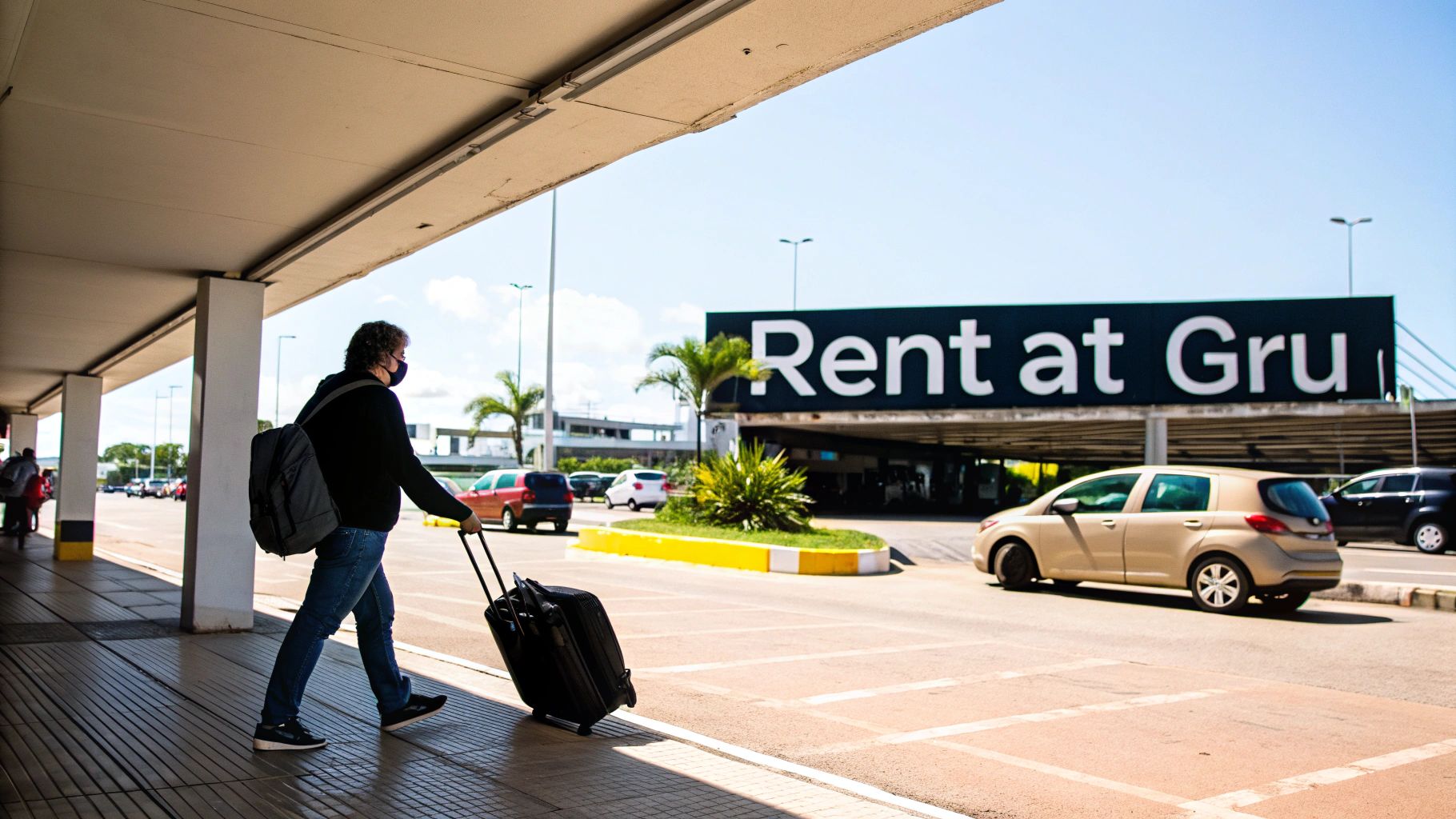
Think of this guide as your complete playbook for renting a car at GRU. We'll walk you through everything, from finding the rental desks tucked away in the terminals to picking the right car for São Paulo's famously energetic (and sometimes chaotic) streets.
To give you an idea of just how busy GRU is, consider the numbers. In March 2025 alone, the airport saw a staggering 24,374 aircraft movements, a jump from 22,708 the previous month. The bulk of these were domestic flights, with 17,478 takeoffs and landings compared to 6,896 international ones. This constant hum of activity shows why having a solid ground transportation plan is so important. If you want to dive deeper into GRU's flight data, momondo.com is a great resource.
What to Expect From This Guide
My goal here is to arm you with all the practical knowledge you need to make a smart decision and kick off your trip without a hitch. No jargon, just straight-to-the-point advice.
Here’s a quick look at what we'll cover:
- Finding the Rental Desks: Simple, step-by-step directions to find the major rental agencies in Terminals 2 and 3.
- Documents You'll Need: A straightforward checklist of what international visitors must have on hand, from your driver's license to any required permits.
- Understanding the Costs: We'll demystify the fees, including airport surcharges and insurance, so you can budget accurately and avoid any nasty surprises.
- Tips for Driving in São Paulo: Get the inside scoop on local traffic laws, including the crucial Rodízio (driving restriction) system, and tips for finding safe parking.
A successful trip often hinges on a smooth arrival. Figuring out your ground transportation ahead of time—whether you rent a car or choose another option—is one of the best ways to eliminate a huge source of travel stress.
Of course, renting a car isn't for everyone. If you'd rather ease into your trip without getting behind the wheel right away, we'll also touch on some great alternatives, like booking a dedicated airport transfer service. By the time you're done reading, you'll have everything you need to decide if renting a car at GRU is the right call for your Brazilian adventure.
Finding Your Rental Car and Getting on the Road
After a long flight into GRU, the last thing you want is a complicated scavenger hunt for your rental car. Guarulhos is a massive airport, and it can feel a little overwhelming at first, but thankfully, finding your vehicle is pretty simple once you know the lay of the land.
Most major car rental companies at São Paulo/Guarulhos have desks right inside the airport terminals. Think of these as the "express lane"—super convenient and designed to get you on your way quickly. Other companies operate just outside the airport grounds. They're more like a "click-and-collect" service; you'll take a short shuttle ride to their lot, but the trade-off is often a better price.
On-Airport Rental Counters: Where to Go
The big players like Localiza, Movida, and Unidas have set up shop in the two busiest terminals, making them easy to find whether you're flying in from another country or another city in Brazil.
- Terminal 2: This terminal handles a mix of domestic and international flights. Once you clear customs and walk into the main arrivals hall, you’ll find the rental car counters right there on the ground floor.
- Terminal 3: This is the main hub for international flights. Just like in Terminal 2, the rental desks are on the ground floor, located just after you pass through baggage claim and customs.
Look for signs that say "Locadoras de Veículos" (which means Car Rentals). They are posted all over and will point you in the right direction. If you want to get a head start, it’s always a good idea to check a GRU airport map before you even take off.
The Off-Airport Shuttle Process
So, what if you booked with a company that’s located off-site? The process is a little different but just as smooth. Instead of heading to a counter inside, you’ll go to a designated meeting point just outside the arrivals hall. Here, branded shuttle buses from the rental companies come to pick up customers.
These shuttles are frequent, usually running every 15-20 minutes or so. The ride to the rental lot is short, typically just 5-10 minutes. Companies do this to avoid the high fees of operating inside the airport, and they pass those savings on to you.
Pro Tip: Your booking confirmation email is your best friend here. It will clearly state whether your rental is on-airport or off-airport and give you precise instructions on where to find the shuttle pickup spot. Double-check it before you fly.
Finalizing the Pickup
Once you’re at the counter—either in the terminal or at the off-site location—you’re on the home stretch. You'll need to show your documents (passport, driver's license, and International Driving Permit) and the credit card you booked with.
The agent will walk you through the final contract, confirm any extras you selected, and then hand over the keys. Before you drive away, take a quick walk around the car. Note any scratches or dings on the rental agreement form and make sure the A/C, lights, and wipers are all working. This quick five-minute check can save you a lot of headaches later and ensures your São Paulo adventure starts off without a hitch.
Breaking Down the Real Cost of Your GRU Car Rental
That attractive daily rate you see online when booking a car from São Paulo/Guarulhos Airport? It’s best to think of that as a starting point. The number on your final receipt is almost always higher once you factor in the mandatory fees, required insurance, and any extras you might need.
It's a bit like buying a concert ticket where the "ticket price" is just the beginning. The real cost comes after the service fees and taxes. Understanding these add-ons from the start is the key to budgeting accurately and avoiding any unpleasant surprises at the rental counter.
The Non-Negotiable: Mandatory Costs and Surcharges
When you rent a car directly from GRU, a few charges are simply part of the deal. These are either required by the airport authority or are standard across all rental agencies operating on-site.
- Airport Surcharge: You’re paying for convenience, and that comes with a fee. Expect an Airport Surcharge of around 12% to be tacked onto your total rental cost. This covers the rental company’s expenses for having a desk right there in the terminal.
- Brazilian Insurance: This one is a biggie. Local law mandates that every rental car has, at minimum, Third-Party Liability (TPL) insurance. This is completely separate from any coverage your home country's credit card might provide and must be purchased locally. A Collision Damage Waiver (CDW) is also standard practice.
To give you an idea of where most people handle their car rental paperwork, here’s a quick breakdown of the primary pickup locations inside GRU.
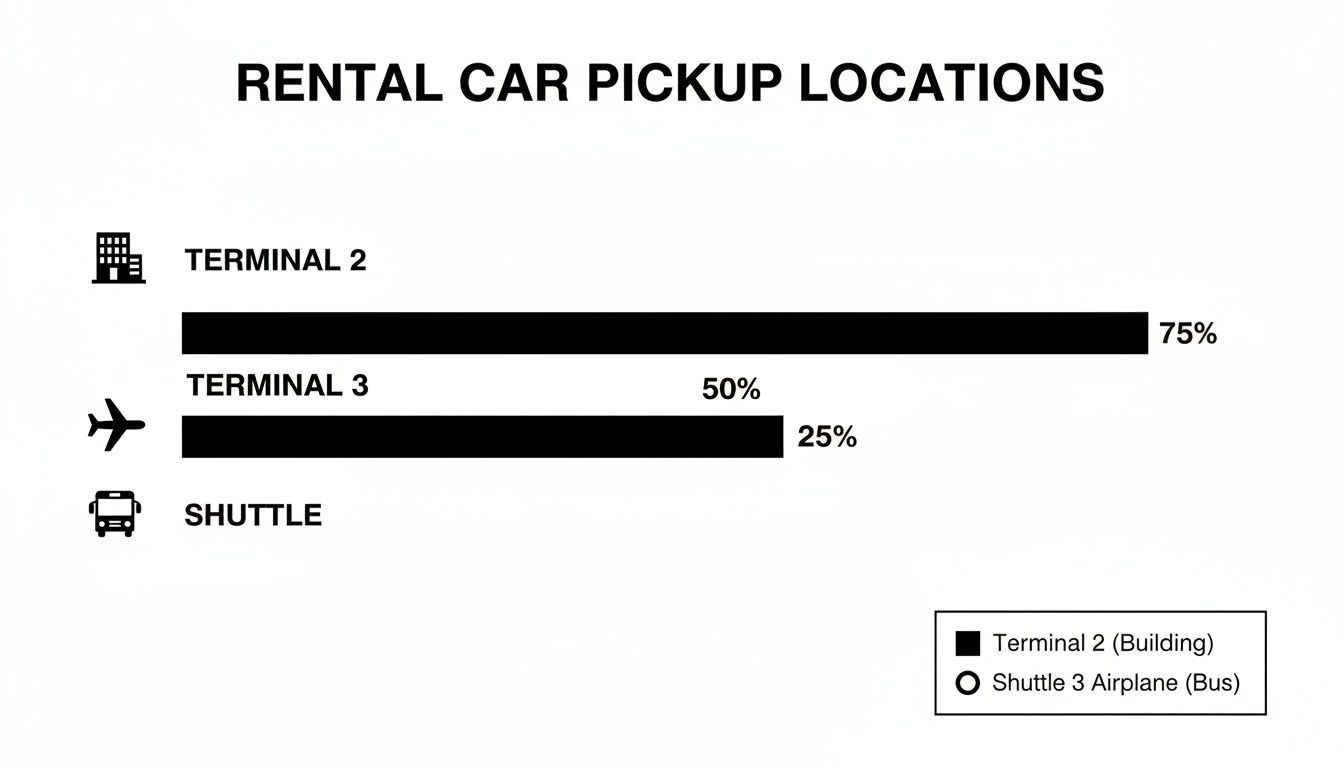
As you can see, Terminal 2 is the main hub. It handles a massive volume of both domestic and international flights, making it the busiest spot for rental car pickups.
Optional Add-Ons That Can Quickly Add Up
Beyond the required fees, you’ll be offered a menu of optional items that can inflate your bill. It’s smart to decide what you actually need before you get to the counter.
- GPS Units: They’re helpful, but using an app like Waze or Google Maps on your smartphone is usually a much cheaper (or free) alternative.
- Child Seats: Essential if you’re traveling with little ones, but they come with a daily fee.
- Additional Drivers: If someone else will be driving, adding them to the agreement almost always comes with an extra daily charge.
My rule of thumb? Take the initial online quote and add 20-30% on top. This gives you a much more realistic estimate of your true cost by accounting for the mandatory insurance and airport fees right from the start.
How Seasons and Car Types Affect Your Price
The cost of your rental car at São Paulo/Guarulhos Airport is all about supply and demand, and that swings wildly with the seasons. As Brazil's busiest airport, GRU saw 24,374 aircraft operations in March 2024 alone, which gives you a sense of the constant demand for vehicles. The average daily rate hovers around $56, but this is just an average.
For instance, renting a basic car in the low season month of May might only set you back $15/day. But try to book that same car during the peak holiday rush in December, and you could easily be looking at $26/day or more—a 44% jump. This is all part of Brazil's massive $2.34 billion rental market, and you can see more data on it over at ceicdata.com.
To illustrate how much prices can vary, here’s a table with some estimated daily costs.
Estimated GRU Car Rental Daily Costs by Season and Vehicle
| Vehicle Category | Low Season Average (May) | High Season Average (December) | Yearly Average |
|---|---|---|---|
| Economy | $15 USD | $26 USD | $21 USD |
| Compact | $18 USD | $32 USD | $25 USD |
| Mid-Size Sedan | $25 USD | $45 USD | $35 USD |
| Standard SUV | $35 USD | $60 USD | $48 USD |
These numbers are just estimates, but they clearly show the advantage of booking during the off-season if your travel dates are flexible.
And remember, driving also means parking. To get a complete picture of your travel expenses, check out our guide on how much parking costs at Guarulhos Airport.
Driving in Brazil: What You Need to Know About Laws and Insurance
Walking up to that rental counter at GRU Airport without the right paperwork is a recipe for a bad start to your trip. It’s the kind of thing that can cause frustrating delays and a lot of unnecessary stress. To make sure you get your keys and get on the road smoothly, you'll need to understand Brazil's specific rules for documents and insurance—they're often quite different from what you might be used to.
Think of it as your pre-drive checklist. Getting these details sorted out beforehand means you’ll be starting your Brazilian adventure in minutes, not hours.
Your Document Checklist for a Smooth Pickup
When you get to the desk, the agent is going to ask for a few specific things. If you're missing any one of them, the whole process can grind to a halt.
Here’s what you absolutely must have ready:
- A Valid Passport: In Brazil, this is your main ID. No getting around it.
- Your Driver's License from Home: Make sure it's valid, not expired, and in good shape. You're legally allowed to drive with it for up to 180 days.
- An International Driving Permit (IDP): Is it strictly mandatory? Not always. But is it a good idea? Absolutely. An IDP is basically an official translation of your license into Portuguese, which is a lifesaver if you get pulled over or have an accident. Some rental agencies flat-out require it, so it's much safer to have one.
Making Sense of Brazilian Car Rental Insurance
This is probably the single biggest point of confusion for international renters. Brazilian law mandates certain types of insurance, and they are not optional. Critically, the insurance you have through your credit card or personal policy back home often doesn't cut it here.
You’ll see two main types of coverage offered, and it's important to know what they are:
- Third-Party Liability (TPL): This is required by Brazilian law, full stop. It covers any damage or injury you might cause to other people or their property. You cannot opt out of this—it has to be purchased with the rental in Brazil.
- Collision Damage Waiver (CDW): While it's technically "optional," you'll find that nearly every rental company insists on it. This is what limits how much you have to pay if the rental car itself gets damaged.
A Word of Warning: A common pitfall is assuming your credit card’s rental insurance has you covered in Brazil. While your card might handle the CDW part, it will not cover the legally mandatory TPL. If you try to decline the rental company's CDW, brace yourself for a massive security deposit—often thousands of dollars—to be placed on your card.
Honestly, the simplest, most stress-free approach is to just accept the full insurance package offered by the rental company. It clears up any grey areas, guarantees you’re following local laws, and lets you drive away from GRU airport with complete peace of mind.
Getting Behind the Wheel: Tips for Driving in São Paulo
Driving your rental car from São Paulo Guarulhos Airport into the heart of the city is an experience, to say the least. The city’s incredible energy is reflected on its roads, and a little preparation can make all the difference between a stressful drive and a confident cruise.
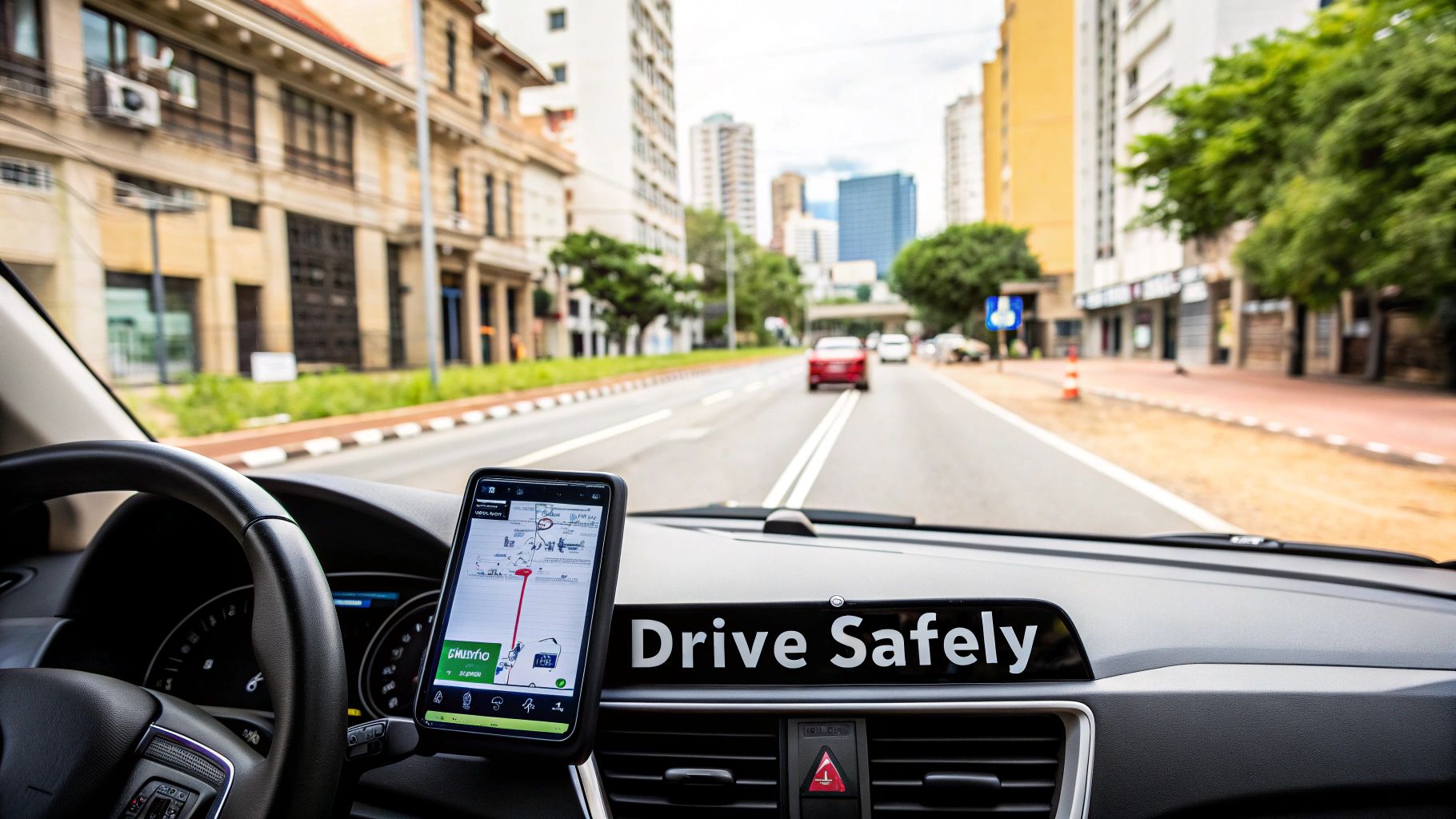
This isn’t just about the basic rules of the road; it’s about getting in sync with the unique rhythm of São Paulo. From a crucial traffic program to local driving habits, knowing what to expect will help you navigate the streets like a seasoned Paulistano.
Understanding the Rodízio Vehicle Restriction
The first thing you absolutely must know about is the Rodízio. This is São Paulo’s system for managing traffic, and it's designed to keep congestion down in the city center during rush hour. Here's the kicker: rental cars are not exempt, so ignoring this rule will definitely result in a fine.
Here’s how it works:
- What it is: A program that limits which cars can drive in a large, central part of the city based on the last number of the license plate.
- When it’s active: On weekdays, during the morning rush (7 AM to 10 AM) and the evening rush (5 PM to 8 PM).
- The system: A different set of license plate numbers is restricted each day. For instance, on Mondays, cars with plates ending in 1 or 2 can't be in the restricted zone during those peak hours.
Before heading into the city, just do a quick search for "rodízio São Paulo hoje" (which means "today's rodízio") to see which plates are restricted. It's a simple check that can save you a lot of trouble.
Navigating Tolls and Parking
Most of the major highways linking GRU Airport to São Paulo and other cities are toll roads. You can usually pay with cash or a card, but the easiest way by far is with an electronic toll pass. Many rental cars come with one, often from a service like Sem Parar. The device handles the tolls automatically, and the charges are just added to your final rental bill. Simple.
When it comes to parking in São Paulo, you’ll need a bit of a strategy. Finding a spot on the street can be tough and often confusing.
Your best bet is to find a secure, paid parking garage, which locals call an estacionamento. They are everywhere, easy to spot with a big "E" sign, and give you total peace of mind, especially if you're leaving the car for a while or overnight.
Must-Have Apps and Staying Safe
You’re going to want a good navigation app for real-time traffic updates. In Brazil, Waze is king. It’s incredibly popular and brilliant for getting around the city’s complex streets. It will reroute you around traffic jams and accidents, and you can even plug in your license plate number so it accounts for the daily Rodízio restrictions. Google Maps is another solid choice.
Finally, just use your common sense and be aware of your surroundings, like you would in any big city. Keep your doors locked and windows up when you're in slow traffic. Tuck your valuables out of sight, and just stay alert.
Comparing Your GRU Transportation Options
While grabbing a rental car from São Paulo Guarulhos Airport gives you ultimate freedom, it’s not always the best move. The right way to get into the city really comes down to your itinerary, budget, and who you're traveling with.
Is the flexibility of having your own wheels worth it, or would another option actually make your life easier?
Think of it like picking the right tool for the job. A rental car is your all-purpose multi-tool. It's perfect if you plan on exploring different neighborhoods, taking day trips out to the coast, or are just juggling a lot of luggage with the family. It gives you the power to go where you want, whenever you want.
But if you're a solo business traveler heading straight to a hotel on Avenida Paulista for a few meetings, a pre-booked airport transfer is probably the smartest, most direct choice. It completely cuts out the headache of navigating São Paulo's notorious traffic right after a long flight.
Weighing Your Choices
Rideshare apps and the classic city taxis fall somewhere in the middle. They both give you that door-to-door convenience without the commitment of renting, which is great for shorter stays or if the thought of driving in a new, massive city is a bit much. The catch? Costs can jump around, especially with surge pricing during rush hour.
Your decision really boils down to a classic trade-off: cost versus convenience. A rental car's daily rate might look steep at first, but it can quickly become cheaper than a string of taxi rides if you're an active family exploring the region for a few days.
To help you sort it out, let's break down the main ways to get from GRU. If you want to dive deeper into one specific option, our guide to ride-sharing services in São Paulo has all the details.
GRU Airport Transportation Comparison
To make things even clearer, here’s a quick side-by-side look at your main choices. This should help you quickly see which one fits your travel plans.
| Transportation Option | Average Cost to Central São Paulo | Convenience Factor | Best For |
|---|---|---|---|
| Rental Car | Varies (plus fuel/parking) | High (Total Freedom) | Families, day-trippers, and explorers. |
| Airport Transfer | Fixed Price (pre-booked) | High (Stress-Free) | Business travelers and first-time visitors. |
| Rideshare App | Variable (Surge Pricing) | Medium (App-Dependent) | Tech-savvy travelers and short trips. |
| Taxi | Metered (Traffic Affects Cost) | Medium (Readily Available) | Quick, direct trips without app usage. |
Ultimately, there's no single "best" option—just the one that’s best for your trip. By weighing the freedom of a rental against the simplicity of a transfer or taxi, you'll find the perfect fit.
Common Questions About Renting a Car at GRU
Renting a car at São Paulo Guarulhos Airport for the first time? It's natural to have a few questions. Getting the details straight before you land will make the whole process a lot smoother. Let's tackle some of the most common things international travelers ask.
Do I Really Need an International Driving Permit?
This is a big one. While your driver's license from home is the main document, having an International Driving Permit (IDP) is a very smart move. Think of it less as a permit and more as an official translation of your license into Portuguese.
It can save you a world of headaches if you're pulled over by traffic police and, in some cases, the rental agency might insist on it. For a truly hassle-free pickup and drive, just get one. It’s a small step that prevents big problems.
Can I Just Use My Credit Card for Insurance?
This is where things can get tricky and trip up a lot of travelers. Brazilian law is very clear: every driver must have Third-Party Liability (TPL) insurance. Here's the catch—your credit card benefits will not cover this. You have to buy it locally at the rental counter.
Now, your card might offer Collision Damage Waiver (CDW) coverage. But if you decline the rental company's CDW, be prepared for them to place a massive security deposit on your card, often running into thousands of dollars.
Honestly, for most international visitors, the simplest and most effective route is to just accept the rental company's full insurance package. It gives you complete peace of mind and avoids any potential financial surprises.
What’s the Deal with the Rodízio Traffic Restriction?
Welcome to São Paulo's 'Rodízio' system! It’s the city's method for easing traffic jams by limiting which cars can drive in the central zone during peak hours (7-10 AM and 5-8 PM) on weekdays. It all comes down to the last number on your license plate.
And no, rental cars do not get a free pass. Before you head into the city center, you absolutely must check which plate numbers are restricted for the day. Getting it wrong means a hefty fine. A great tip is to use a navigation app like Waze, which is usually smart enough to route you around the restricted areas based on the day.
Navigating São Paulo's sprawling metropolis demands reliable transport. If you'd rather skip the paperwork and driving complexities for a seamless arrival, let Gru Airport Transfers take care of you. Book a private, professional transfer today and enjoy a comfortable, on-time ride to your destination.

