

You’ve just touched down at São Paulo/Guarulhos International Airport (GRU), and your first big decision is waiting for you: Should you tackle the car hire at Sao Paulo airport, or is there a simpler, pre-booked way to get where you're going? The right answer really hinges on what you value more—the absolute freedom of driving yourself versus the sheer convenience of a dedicated transfer service. For many travelers, the long lines and confusing paperwork at the rental desk are the last thing they want after a long flight.
Your Guide to Renting a Car at GRU Airport

Choosing to rent a car at GRU means weighing your independence against some very real potential headaches. Sure, the idea of exploring São Paulo on your own terms sounds fantastic. But the reality of renting from one of South America's busiest airports can quickly throw a wrench in your plans, adding stress and unexpected delays right at the start.
This guide is here to give you the full, unvarnished picture. We'll walk through everything from locating the rental counters to making sense of the final bill. The goal is to help you figure out if a rental car truly fits your travel style, or if a more direct, stress-free option makes more sense.
The Real Cost of Convenience
That initial price you see online for a rental car? It can be deceiving. While demand for rentals at São Paulo/Guarulhos International Airport is always high, the actual costs are a mixed bag. Over the past month, the average daily rate for a car hire at GRU hovered around £27.33 (about $35 USD). You might even spot an economy model for as low as £10.22 ($13 USD) per day.
But that’s not the whole story. Other booking sites show higher averages, and if you're traveling in December, expect seasonal demand to hike prices by as much as 44% compared to the rest of the year.
Beyond that base rate, you absolutely have to factor in the extras:
- Mandatory Insurance: Basic coverage might be included, but if you want comprehensive protection, your daily cost will jump significantly.
- Fuel Policies: Most companies use a "full-to-full" policy. If you don't return the car with a full tank, they'll hit you with painfully high refueling fees.
- Additional Fees: Need a GPS, a child seat, or want to add another driver? Each one adds to your daily total.
For many travelers, the biggest hidden cost isn't money—it's time. After a long flight, the last thing you want is to spend an hour stuck in a queue, wrestling with paperwork, and then trying to find your car in a massive parking garage. It's a draining start to any trip.
GRU Car Hire vs Airport Transfer At a Glance
So, how does grabbing a rental car stack up against a pre-booked airport transfer? Let's break it down side-by-side. This table offers a quick comparison to help you see which option aligns better with your priorities for arriving in São Paulo.
| Feature | Car Hire at GRU | Gru Airport Transfers |
|---|---|---|
| Convenience | Low. Requires queues, paperwork, and locating the vehicle. | High. Driver meets you at arrivals; no waiting or paperwork. |
| Cost | Variable. Base rate plus fuel, insurance, and extra fees. | Fixed. Price is all-inclusive and confirmed at booking. |
| Stress Level | High. Navigate unfamiliar roads and heavy traffic after a flight. | Low. Relax and let a professional driver handle the journey. |
| Time | Slow. Can take over an hour from landing to driving away. | Fast. You're on your way within minutes of meeting your driver. |
| Flexibility | High. Complete freedom to explore on your own schedule. | Low. Point-to-point service for a specific destination. |
While a rental car offers undeniable freedom for your trip, a service like Gru Airport Transfers clearly wins for a smooth, predictable, and stress-free arrival.
Considering the Alternatives
It's precisely this friction that has more and more visitors looking past the rental counter. Standard ride-sharing services are one option, but they come with their own set of problems, like unpredictable surge pricing and spotty availability at a busy airport. For those who want convenience without driving, renting a car with a professional driver is another route to consider.
Ultimately, though, nothing beats a dedicated airport transfer for pure reliability. You get a fixed price, a professional driver waiting for you, and a seamless start to your time in São Paulo. To see how these services compare in more detail, check out our guide to understanding GRU ride sharing and transfer services.
Comparing the Best Car Rental Companies at GRU
Picking a rental car company at São Paulo's Guarulhos airport is a bit like choosing a travel partner. Some are reliable and easygoing, while others can be high-maintenance and full of surprises. To avoid starting your trip on the wrong foot, you have to look past the flashy daily rates and figure out who will actually get you on the road without a headache.
The main names you'll see are the big Brazilian players, Localiza and Movida, going head-to-head with international brands like Europcar and Alamo. They're all vying for your business, but the reality on the ground—from the quality of the cars to the length of the queue—can be worlds apart. It's not unlike booking a flight; some are no-frills and efficient, others offer a premium experience, and a few are just known for frustrating delays.
The Big Three: Localiza, Movida, and Europcar
Let's start with the heavy hitters. You can't miss the counters for Localiza, Movida, and Europcar at GRU, and each has its own reputation among travelers. Knowing what to expect from each is your first line of defense against rental car woes.
- Localiza: Generally considered the market leader in Brazil, and for good reason. They have a massive fleet and locations everywhere. You can usually find anything from a basic hatchback to a larger Chevrolet Spin for the family, making them a solid all-around choice.
- Movida: These guys are often the price leaders. If you're hunting for a deal, their name will probably pop up first with some very tempting rates. They're known for being aggressive with their pricing and promotions.
- Europcar: As a global brand, Europcar brings a sense of familiarity, especially for international visitors. A potential perk is that they sometimes have multiple pickup spots around the airport, which can be convenient.
Of course, what a company promises online and what you experience after a long flight can be two very different things.
Digging Deeper into Ratings and Reality
The real story isn't in the ads; it's in the reviews and customer feedback. While the competition at GRU is fierce, you can see a clear difference in reliability. Looking at data from various booking sites, the average supplier rating sits around 4.2 out of 5, but that number hides some pretty dramatic swings.
Some companies, like Alamo, occasionally hit a perfect 5.0 score, with customers raving about the car's condition and a quick pickup process. Then you have a major brand like Europcar, which has been rated as low as 3.0 overall at times. It’s a stark reminder that a well-known logo doesn't automatically mean good service. For a closer look at what travelers are saying, you can explore the customer ratings for GRU car hire yourself.
Choosing a rental based only on the lowest price is a gamble. Any money you save upfront can vanish in an instant when you're stuck in a long line, hit with surprise fees, or handed the keys to a car that doesn't fit your luggage. It's why so many seasoned travelers just opt for the predictability of a pre-booked transfer.
Making the Right Choice for Your Trip
So, how do you decide? It really comes down to what you value most.
- If you prioritize reliability and choice: Localiza is usually a safe bet. They might not be the absolute cheapest, but their solid ratings and varied fleet mean you're likely to get what you booked without any drama.
- If budget is your top concern: Movida will often have the most attractive prices, with daily rates sometimes dipping to around $50 USD. Just be ready for potential upsells at the counter and read the fine print on your booking very, very carefully.
- If convenience is everything: Europcar's multiple locations can be a big plus. But given their hit-or-miss reviews, I’d strongly recommend checking their most recent customer feedback before you commit.
Ultimately, renting a car at GRU requires a bit of homework. For travelers who would rather skip the research and potential hassle, the fixed price and guaranteed pickup of a professional airport transfer offers a genuinely stress-free start to your São Paulo visit.
Understanding Rental Costs And Seasonal Price Swings
Booking a car at São Paulo Airport can feel a bit like playing the stock market. Prices go up, they come down, and you’re left wondering if you actually got a good deal. What you see one day can be totally different the next, thanks to a potent mix of seasonal demand, local holidays, and even major city events. Getting a handle on why prices swing so much is key to keeping your budget in check.
It's a lot like buying airline tickets. If you try to book a car during a peak travel time—say, the December holidays or the July winter break—it's like trying to snag a last-minute flight to a popular beach. Demand is through the roof, cars are scarce, and prices naturally climb. But if you have some wiggle room in your travel dates, you can find some serious savings by aiming for the off-season.
How The Calendar Affects Your Wallet
When it comes to renting a car at GRU, timing is everything. The data doesn't lie: some months are simply far cheaper than others. The difference between the high and low seasons can be pretty dramatic, with daily rates sometimes doubling or even tripling.
This kind of price swing can make or break a travel budget, which is why planning ahead is so important. May often shows up as a bargain hunter's dream, with some sources reporting daily rates as low as $15.
You can also find great deals in:
- April, when prices for small cars can drop 29% below the yearly average.
- September, which often sees medium-sized cars dip by 23%.
- February, another sweet spot where you can find compacts for around $25 per day.
On the flip side, brace yourself for December, when prices can jump by over 44%. And a busy month like August has seen the yearly average of $28.82 skyrocket to an eye-watering $104.27.
This chart gives you a quick visual comparison of the big players at GRU, laying out their average customer ratings, typical prices, and locations right at the airport.
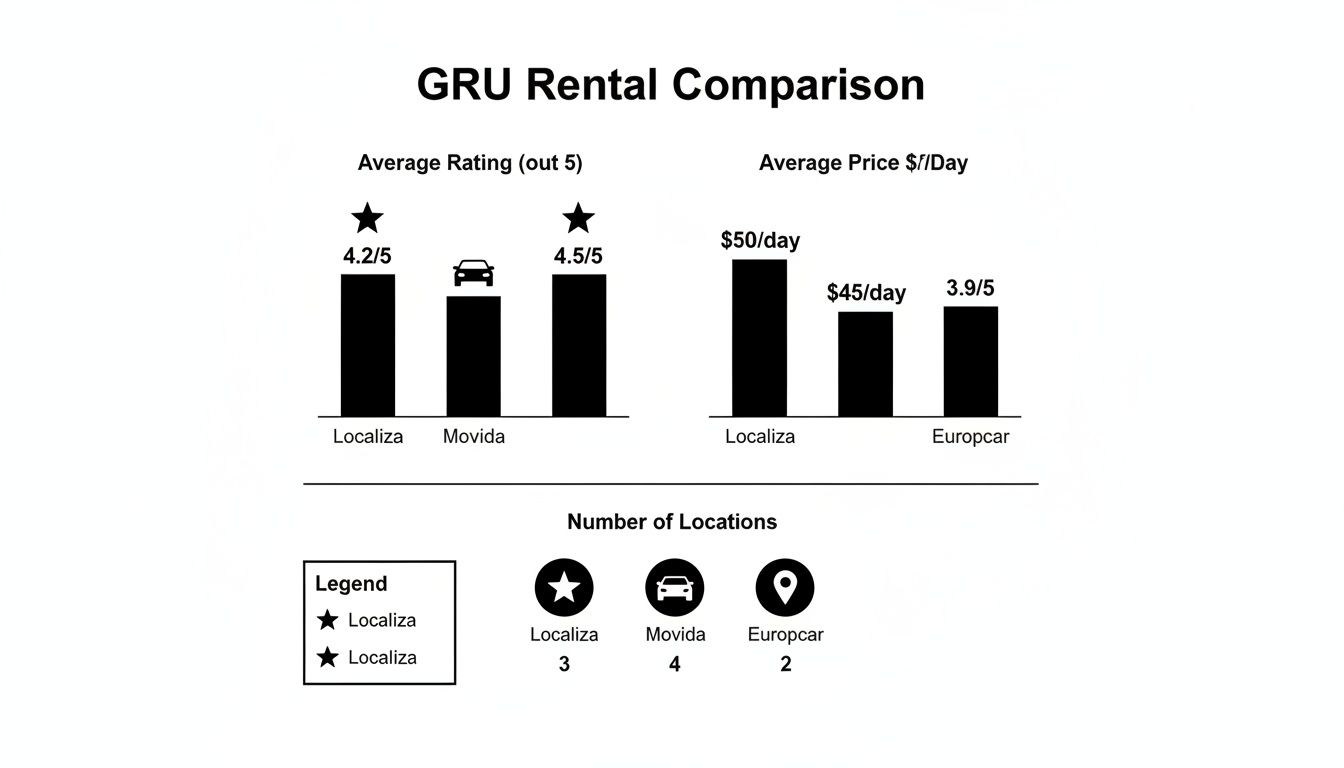
As you can see, things like customer satisfaction and price can be all over the map depending on who you book with. It’s a good reminder to look beyond just the daily rate when making your choice.
Here’s a more detailed look at what you can expect to pay throughout the year.
Typical Daily Car Hire Rates at GRU by Month and Vehicle Type
| Vehicle Type | Low Season Average (e.g., May) | High Season Average (e.g., December) | Yearly Average |
|---|---|---|---|
| Economy | $18 | $35 | $26 |
| Compact | $22 | $42 | $31 |
| Intermediate/Sedan | $28 | $55 | $40 |
| SUV | $35 | $70 | $52 |
These numbers really highlight the value of booking during the shoulder seasons. A little flexibility can go a long way in stretching your travel funds.
What About All The Hidden Costs?
The price you see advertised online is almost never the final price you'll pay. The total cost of renting a car is notorious for being padded with extra fees and charges that can pop up unexpectedly when you're standing at the counter. Knowing what to look for is your best defense against a surprisingly high bill.
Watch out for these common add-ons:
- Insurance: The basic liability coverage included is often just that—basic. If you want more robust protection like a Collision Damage Waiver (CDW) or theft coverage, your daily rate will climb.
- Fuel Charges: Most companies use a "full-to-full" policy. Forget to top off the tank before you return it, and they’ll gladly refuel it for you—at a wildly inflated price per liter, often double what you'd pay at a local gas station.
- Young Driver Fees: If you're under 25, get ready for a hefty daily surcharge. Rental companies see younger drivers as a higher risk, and they price accordingly.
- Airport Taxes: Renting right from the terminal is convenient, but it usually comes with an "airport concession fee" that gets passed directly on to you.
- One-Way Fees: Planning a road trip and dropping the car off somewhere else? Expect a significant one-way rental fee for the convenience.
Parking is another expense that's easy to forget. If your car is going to be sitting for a few days, you need to factor in daily parking costs, which can add up fast in a big city like São Paulo. For a closer look at those costs, check out our guide on how much it costs to park at Guarulhos Airport.
When you add it all up, the true cost of that "cheap" rental can be much higher than you think. It’s why many travelers end up preferring the simplicity and certainty of a pre-booked airport transfer. With a service like Gru Airport Transfers, the price you see is the price you pay. All-inclusive, no surprises.
Your Essential Document and Driver Checklist

Think of the rental counter at GRU as the first checkpoint of your trip. Getting through it smoothly means having all your ducks in a row. I've seen it happen countless times: a traveler shows up unprepared, and their entire plan gets thrown off course before they've even left the airport.
Having your documents in perfect order isn't just a suggestion; it's a hard rule for any car hire sao paulo airport company. One missing piece of paper or the wrong kind of card can bring your rental process to a dead stop, leaving you stuck and scrambling for another way to get to your hotel.
Core Documentation Requirements
Before you even step up to the counter, have these items out and ready. The rental agents are thorough, and they’ll be looking for each one.
- Valid Driver's License: This is the first thing they'll ask to see. Make sure it's your full, unexpired license from your home country, not a learner's permit.
- Your Passport: For international travelers, your passport is your main ID. The name on it needs to be an exact match with what's on your driver's license and credit card. No exceptions.
- International Driving Permit (IDP): This is a big one. While it’s not always strictly enforced for every nationality, I strongly advise getting one. An IDP is an official translation of your license into Portuguese, which can clear up any confusion and prevent major headaches. It's easy to get before you travel and well worth the small effort.
The Credit Card Rule You Cannot Ignore
This is probably the single biggest stumbling block for travelers. Rental companies in Brazil are incredibly strict about payment, and this is a rule they don’t bend.
You must have a physical credit card in the primary driver's name. This isn't just for paying; it's for the security deposit. The agency will place a hold on your card for a significant amount, often hundreds of dollars, to cover any potential damages.
Debit cards, prepaid cards, and cash are almost never accepted for the security deposit. The name on the credit card has to perfectly match the driver's license and reservation. If your spouse or travel partner has the credit card but isn't listed as the main driver, you're likely out of luck.
Driver Age and Additional Drivers
Your age plays a big role, too. Generally, the minimum age to rent a car in Brazil is 21. If you're under 25, get ready for a hefty "Young Driver Surcharge," a daily fee that rental companies add to cover what they see as a higher insurance risk.
Planning to share the driving? Anyone else who will get behind the wheel needs to be there with you at the rental counter. They'll have to show their own valid driver's license and passport to be added to the agreement. Don't think you can just add them later or let an unregistered friend drive—doing so will instantly void your insurance.
It might seem like a lot to remember, but this is standard procedure at a major international airport. For a lot of visitors, the sheer simplicity of booking a professional service like Gru Airport Transfers is a much better fit. No document checks, no credit card holds, and no age surcharges—just a reliable driver waiting to take you wherever you need to go.
Navigating the Pickup and Drop-Off Process

Picking up your rental car at a massive airport like GRU isn't about luck; it's about knowing the lay of the land. The process really kicks off the second you walk through customs. With several terminals and a mix of on-site and off-site lots, just knowing where you're headed is half the battle. Let's walk through a clear plan to get you from the arrivals hall into the driver's seat without any headaches.
First thing's first: find that rental desk. The big names like Localiza, Movida, and Europcar have counters right inside the arrivals areas of Terminals 2 and 3. After a long flight, this is a huge plus—you can sort out all the paperwork right there instead of immediately having to figure out the airport's shuttle system.
Some of the smaller or more budget-focused companies, however, operate off-site. If that's the case, your rental voucher will have clear instructions for their free shuttle bus. You'll find these shuttle stops clearly marked just outside the terminal exits. Just be ready for a short wait and a 10-15 minute bus ride to their facility.
Your Pre-Departure Vehicle Inspection
Once the keys are in your hand, it's time for the most important step of all: inspecting the car. Don't let your excitement to get on the road make you rush through this. Do a full walk-around of the vehicle with the rental agent and point out every single scratch, ding, or scuff you see, no matter how tiny.
Pull out your smartphone and take photos or a quick video. Pay special attention to:
- Scratches and Dents: Check every single panel, the doors, and both bumpers.
- Windscreen Chips: Look closely for any small cracks or chips in the glass.
- Tyre Condition: Make sure the tires have good tread and no obvious signs of damage.
- Interior Condition: Note any stains on the seats, tears in the upholstery, or marks on the dashboard.
Make absolutely sure every bit of damage is noted on your rental agreement before you sign anything. This quick five-minute check can save you a world of trouble and protect you from being blamed for pre-existing issues when you bring the car back.
Mastering the Return Journey
Dropping off the car requires the same level of attention as picking it up. The goal here is simple: return the car exactly as your rental agreement requires to avoid any nasty last-minute fees. To get your bearings, it’s a good idea to check a GRU airport map to see how the terminals and access roads are laid out.
The "full-to-full" fuel policy is the standard for a reason—it's straightforward but strict. If you don't bring the car back with a full tank, the rental company will happily fill it up for you at a premium, often charging 50-100% more per litre than what you'd pay at a local gas station.
To avoid this costly mistake, plan to fill up at a station a few kilometers away from the airport. Finally, give yourself plenty of time. Budget at least 30-45 minutes for the entire drop-off process, which includes the vehicle inspection and the shuttle ride back to your departure terminal. Nothing leads to a costly error like being rushed and stressed.
Of course, for travelers who’d rather sidestep this whole logistical dance, the simplicity of a pre-booked airport transfer is a surefire way to end your São Paulo trip on a calm, stress-free note.
A Visitor's Guide to Driving in São Paulo
Let's be honest: driving in São Paulo is an experience. It’s less like a leisurely drive in the countryside and more like being thrown into a high-speed, improvisational dance on a very crowded floor. The city has a rhythm all its own, and for a first-timer picking up a car hire from Sao Paulo airport, it can feel like pure chaos.
This isn’t meant to scare you, but to set the right expectations. Thriving on São Paulo's roads means learning the unwritten rules and local habits that your GPS won't mention. The moment you turn the key, this city demands your complete and undivided attention.
Understanding the Rodízio System
First things first, you need to know about the 'rodízio' (rotation). This is the city's system for restricting vehicle access to the expanded central zone during rush hour, all in an effort to curb the legendary traffic jams. It works based on the last number of your car's license plate.
Here’s the daily breakdown:
- Monday: Plates ending in 1 and 2 are restricted.
- Tuesday: Plates ending in 3 and 4 are restricted.
- Wednesday: Plates ending in 5 and 6 are restricted.
- Thursday: Plates ending in 7 and 8 are restricted.
- Friday: Plates ending in 9 and 0 are restricted.
These restrictions are in effect from 7 AM to 10 AM and again from 5 PM to 8 PM. Getting caught driving during your restricted time will earn you a steep fine and points on your license. Before you leave the airport, make sure to ask your rental agency about the plate number so you don't get a nasty surprise.
Navigating Local Driving Culture
Paulistanos—the locals of São Paulo—drive assertively. You'll quickly notice that lane markings can feel more like gentle suggestions than hard rules, and turn signals are… optional for some. The key is to be a defensive driver who also acts with confidence. Hesitate too much, and you'll disrupt the flow and create confusion for everyone around you.
You'll also share the road with a swarm of motorcycles, or motos. They zip between lanes of slow-moving cars, a practice known locally as the corredor (corridor). Always, always check your mirrors and blind spots twice before making a move, because a moto can appear out of thin air.
The constant buzz of traffic, the aggressive lane changes, and the sheer volume of vehicles create a high-stress environment. For many visitors, this is the exact opposite of a relaxing holiday. It’s why the calm predictability of a professional driver is so appealing.
Essential Tips for a Safer Drive
If you’re still up for the challenge, a few tips can help keep your blood pressure down. For starters, navigation apps like Waze or Google Maps are your best friends. Their real-time traffic data is absolutely essential for finding a way through the city's notorious gridlock.
Also, secure parking is not a suggestion—it's a necessity. Always look for estacionamentos (paid parking lots) and never, ever leave valuables visible inside the car. Street parking is a gamble, both in terms of security and confusing local rules.
Finally, do everything you can to avoid driving during peak hours. São Paulo is a city of over 12 million people, and it often feels like every single one of them is on the road between 7-10 AM and 5-8 PM. A trip that might take 20 minutes in the middle of the day can easily stretch to over an hour during rush hour.
Driving yourself offers a certain kind of freedom, but it comes with the heavy price of navigating an intense and demanding environment. For a truly stress-free arrival, a service like Gru Airport Transfers lets you relax while a seasoned local expert handles the chaos for you.
Frequently Asked Questions About GRU Car Hire
Even after going through all the details, you probably still have a few specific questions floating around. That’s completely normal. Let’s tackle some of the most common things people ask when they’re thinking about renting a car at São Paulo airport.
This is your go-to spot for quick answers to clear up those final doubts before you hit "book."
Do I Absolutely Need an International Driving Permit?
The short answer? Yes, you really should have one. While a rental agent might let it slide if your license is in a Latin-based language, Brazilian law is the final word, and it often requires an International Driving Permit (IDP) for foreign drivers.
Think of the IDP as just an official, multi-language translation of the license you already carry. Bringing one along is a cheap and easy way to avoid any headaches at the rental counter or, more importantly, if you get pulled over. It's a small bit of paperwork for a whole lot of peace of mind.
Can I Use a Debit Card for the Security Deposit?
This is a hard no. It’s one of the most common stumbling blocks for international renters in Brazil. You absolutely must have a physical credit card, and it has to be in the main driver's name, to cover the security deposit.
The rental company places a hold on your card—often for hundreds of dollars—to cover themselves in case of damage. They simply don't accept debit cards, prepaid cards, or cash for this. Double-check that the name on your credit card perfectly matches what's on your driver's license to avoid a frustrating dead end at the counter.
What Is the Minimum Age to Rent a Car at GRU?
In Brazil, the standard minimum age for renting a car is 21. But if you're under 25, get ready for an extra charge.
This is often called a "Young Driver Surcharge," and there's no getting around it. Rental companies add this daily fee because they see younger drivers as a higher insurance risk. It can seriously inflate the total cost, so if you're in that age bracket, make sure you account for it in your budget.
Is It Cheaper to Book in Advance or at the Airport?
Booking your car hire for São Paulo airport ahead of time is, without a doubt, the smarter and cheaper way to go. Just showing up at the counter after you land is a recipe for sticker shock. You'll be hit with sky-high "walk-up" rates and whatever leftover cars they happen to have.
When you book online in advance, you can shop around for the best deals, lock in a good price, and guarantee the car you actually want is waiting for you. It takes all the guesswork and stress out of the equation after a long flight.
Feeling like this is a lot to juggle? If navigating rental rules and São Paulo traffic sounds like more trouble than it's worth, there’s an easier way. With Gru Airport Transfers, a professional driver meets you right at arrivals, ready to whisk you away to your destination. No paperwork, no deposits, no stress. Book your hassle-free ride with Gru Airport Transfers today.
