

At its heart, a ride sharing service is a tech platform—usually a mobile app—that connects people who need a ride with drivers using their own cars. Think of it less like a traditional taxi company and more like a high-tech, on-demand carpool system you can call up right from your phone.
How a Ride Sharing Service Works for Travelers

The whole system works like a digital matchmaker. It uses slick technology to connect someone needing to get from point A to point B with a driver nearby who's ready to take them there for a fee. Everything is handled through a simple app on your smartphone.
For you, the traveler, the process is designed to be incredibly smooth. You just open the app, pop in your destination, and almost instantly, you see a fare estimate and how long you'll have to wait. This upfront pricing is a game-changer, taking away the guesswork of a running taxi meter. Once you hit confirm, the real magic happens behind the scenes.
The Matching and Pricing Algorithm
When you tap that "Request Ride" button, the app isn't just picking a driver at random. It’s running a sophisticated algorithm that juggles multiple factors in real time to find the best match for you. The goal is maximum efficiency for both you and the driver.
The algorithm is constantly crunching a few key variables:
- Proximity: It first looks for the drivers closest to you to cut down on your wait time.
- Driver Availability: It only sends your request to drivers who are actively online and ready for a trip.
- Destination and Route: Sometimes, the system is smart enough to match you with a driver already heading in your direction or just finishing a drop-off nearby.
- Dynamic Pricing: The price you see isn't fixed. It shifts with supply and demand. If a ton of people are requesting rides at once (like after a concert) and there aren't enough drivers, prices go up. This is often called "surge pricing."
Think of it like a smart auction house. The ride sharing service app constantly balances the "bids" from passengers (ride requests) with the "supply" of drivers on the road. This balance determines the price and ensures a car is usually just minutes away.
The Traveler's Step-by-Step Experience
From the moment you decide you need a ride to the second you step out at your destination, the app walks you through a clear, predictable process. Getting the hang of this flow is key, especially when you're navigating a hectic place like an airport.
Here’s how a typical trip unfolds:
- Request: Open the app and enter where you are and where you want to go.
- Confirm: The app shows you the estimated cost and different car options (like a standard sedan or a larger SUV). You pick one and confirm. For travelers who like to plan, it's always worth checking if you can book an Uber in advance to lock in your ride and avoid any last-minute hassle.
- Match: The platform finds you a nearby driver and sends you their name, photo, car model, and license plate.
- Track: You can watch your driver’s car moving towards you on a real-time map, so you know exactly when they’ll pull up.
- Ride: The driver arrives. You double-check that the car and license plate match what's in the app, hop in, and you're off.
- Payment: When you arrive, the fare is automatically charged to the credit card or payment method on your account. No fumbling for cash or swiping cards.
- Rate: After the ride, the app will ask you to rate your driver. This feedback system is crucial for helping maintain the quality of the service.
This automated, data-driven system is what sets a modern ride sharing service apart from old-school transport, offering a mix of convenience and clarity that has completely changed how we get around cities all over the world.
Weighing the Pros and Cons for Airport Trips
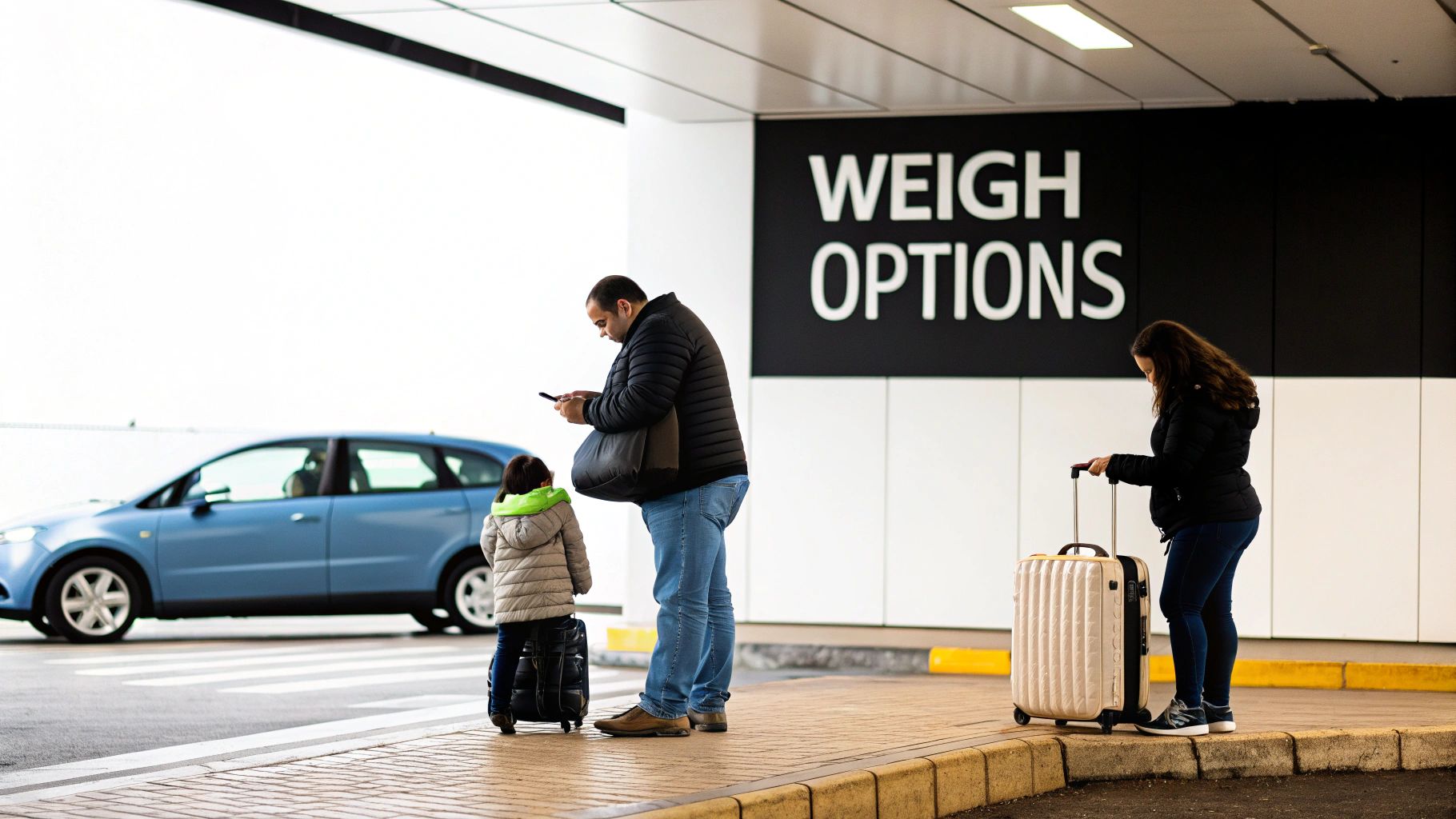
When your plane finally touches down, the last thing you want is a stressful scramble to get to your hotel or home. Tapping a button on a ride sharing service app feels like the modern, go-to solution. It promises a quick pickup, right from your phone.
But is that on-demand convenience really the best bet for an airport transfer?
The honest answer is: it depends. For every clear advantage a ride share offers, there's a potential pitfall that can derail the start of your trip. To make the right call for your situation, you really need to look at both sides of the coin.
The Clear Advantages of Ride Sharing
Let's start with the obvious appeal. Using a service like Uber or 99 is incredibly easy. You can request a ride the second you grab your bags, all from an app you probably use back home. No need to book anything in advance.
Cost is another big draw. For a solo traveler or a couple with just a couple of bags, a standard ride share is often cheaper than a taxi or a private car, especially if you're not going too far. You get a fare estimate upfront, which takes some of the guesswork out of the equation.
Here’s what makes them so popular:
- On-Demand Booking: Perfect for unpredictable arrival times or if you simply forgot to plan ahead. You just request a car when you're ready.
- Familiar App Interface: No need to figure out a new booking system. You just use the app you already know.
- Potential Cost Savings: If you catch it at the right time without surge pricing, the fare can be quite competitive.
This blend of convenience and cost is hard to beat. But the unique chaos of an airport can quickly flip those pros into cons.
The Critical Drawbacks for Airport Travelers
While easy to book, the airport environment highlights some major weaknesses in the ride-sharing model. The biggest one? Price volatility. Airport arrival times are peak demand times. This triggers "surge pricing," which can easily double or even triple your fare without warning.
A study from the Economic Policy Institute revealed a telling trend: after gaining market share, Uber’s prices effectively jumped by 18% per year between 2018 and 2022. The strategy of hiking fares while squeezing driver pay means the "low-cost" promise isn't always a reality.
Then there’s the luggage gamble. When you book a standard car, you have no idea if you're getting a roomy sedan or a tiny hatchback. If you're traveling with family, multiple large suitcases, or bulky gear like a surfboard, you're rolling the dice on whether it will all fit.
Finally, the pickup itself can be a mess. Major airports like GRU restrict ride-share drivers to specific, often crowded, pickup zones. You might have to haul your luggage on a long walk just to find the right spot, then try to pick out your driver's car from a sea of identical-looking vehicles. It’s a stressful start to any trip.
Ride Sharing vs Private Transfer: A Quick Comparison for Airport Travel
To make the choice clearer, it helps to see the options side-by-side. While a ride share offers spontaneity, a private transfer is built around reliability and peace of mind—qualities that are often priceless after a long flight.
| Feature | Ride Sharing Service (e.g., Uber/99) | Private Airport Transfer (e.g., Gru Airport Transfers) |
|---|---|---|
| Booking | On-demand or short-notice pre-booking. | Must be pre-booked in advance. |
| Pricing | Variable; subject to surge pricing based on demand. | Fixed price quoted and confirmed at booking. No surprises. |
| Vehicle | Random assignment; size and luggage capacity are not guaranteed. | You choose the vehicle type to match your group and luggage needs. |
| Pickup Location | Designated, often crowded public ride-share zones. | Personal meet-and-greet inside the arrivals hall with a name sign. |
| Wait Time | Unpredictable; depends on driver availability and traffic. | Driver tracks your flight and is waiting for you upon arrival. |
| Driver | Varies; gig worker with fluctuating experience. | Professional, vetted chauffeur experienced in airport transfers. |
| Best For | Solo travelers, couples with light luggage, budget-focused trips. | Families, groups, business travelers, and anyone seeking reliability. |
This table lays it out simply: one prioritizes on-demand flexibility, while the other prioritizes guaranteed, stress-free service.
When the Cons Outweigh the Pros
Think about these common travel scenarios where a ride share might cause more headaches than it's worth:
- Late-Night or Red-Eye Arrivals: Fewer drivers are out late, meaning longer waits and almost certain surge pricing.
- Traveling with Family or Groups: The risk of your car being too small for your people and luggage is a major gamble.
- Business Travel: When you have a meeting to get to, the unpredictability of wait times and chaotic pickups is a risk you can't afford.
- First-Time Visitors: Trying to navigate a confusing airport pickup area in a new country is an unnecessary layer of stress.
In these cases, the unpredictability of a ride sharing service—from the final cost to finding your car—can easily cancel out the convenience. This is where looking at an alternative like a private transfer becomes a practical, smart decision for a smooth start to your journey.
Navigating Safety and Reliability on Your Ride
When you've got a plane to catch, the last thing you want to worry about is your ride to the airport. Peace of mind is just as important as your passport. Using a ride sharing service naturally brings up questions about safety and reliability. You're essentially putting your trust in an app and a stranger to get you to one of the most time-sensitive destinations there is.
On the surface, these platforms come with a whole host of features designed to make you feel secure. The tech creates a digital paper trail for every trip, which gives you a level of accountability you just don't get when hailing a random cab off the street.
Standard In-App Safety Features
Major ride-sharing apps have really beefed up their safety tools over the years. These features are pretty much standard now and form the foundation of their promise to keep you safe. When you book a ride, you can generally count on:
- Driver Screening: Before anyone can drive for these platforms, they have to go through background checks that look for criminal records and major driving violations.
- GPS Trip Tracking: From the moment you're picked up to the second you arrive, your entire trip is tracked by GPS. You can watch your route live and even share your status with a friend or family member so they can follow along.
- Two-Way Ratings: This simple system is surprisingly effective. Both riders and drivers rate each other, which encourages everyone to be on their best behavior. Drivers with consistently bad ratings risk getting kicked off the platform.
- Emergency Assistance: Most apps now have an in-app emergency button. If you ever feel unsafe, you can tap it to connect directly with local emergency services.
These digital tools provide a great starting point for trust. But the real world, especially a chaotic airport, can throw a few curveballs that an app can't always handle.
Real-World Limitations at the Airport
That well-designed app on your phone can feel a world away from the hectic reality of an airport pickup zone. This is where the one-size-fits-all model of a ride sharing service can start to show its weaknesses, especially when you compare it to a service built specifically for airport travel.
The biggest issue is the lack of a consistent standard. Your driver is an independent contractor, and their car is their own. This means the level of professionalism, driving skill, and even the cleanliness of the car can be a complete gamble. One ride might be fantastic, and the next… not so much.
The core business model of many ride-sharing platforms is built on regulatory arbitrage and minimizing operational costs. This often means the responsibility for vehicle maintenance, professional training, and passenger comfort falls entirely on the individual driver, leading to an inconsistent and unpredictable passenger experience.
Another headache is just finding your car. Imagine standing at the pickup curb with dozens of similar-looking cars pulling up every minute. Trying to spot your specific vehicle by matching a license plate while juggling luggage in a crowd is a recipe for stress. This confusion can also create openings for impersonators or scammers. The rock-solid reliability you need for an airport trip can get lost in the shuffle. If you're looking for something you can truly count on, it helps to understand what a reliable airport shuttle service brings to the table.
Actionable Safety Tips for Every Traveler
A little awareness goes a long way. Building a few simple habits can bridge the gap between the app's features and the real-world situation, making sure you travel smarter and safer every time.
Before you even open the car door, take a beat and double-check everything.
- Match the Details: Make sure the car’s make, model, and license plate are an exact match to what your app shows. If anything is off, do not get in.
- Confirm Your Driver: Ask the driver, "Who are you here to pick up?" Let them say your name first. Don't ask, "Are you here for me?" because anyone could just say "yes."
- Sit in the Back: This gives you some personal space and, more importantly, access to both rear doors. You can exit from either side of the car if you need to.
- Keep It in the App: Never, ever agree to a ride or payment outside of the app. Keeping the transaction official means your trip is logged, tracked, and insured by the company.
- Trust Your Instincts: If something just feels wrong—about the driver, the car, or the situation—cancel the ride. Your safety comes first. It's always better to be safe and wait a few more minutes for another car.
Understanding the True Cost of Your Airport Ride
When you pull up a ride-sharing app, the price you first see for your airport trip is rarely the final number that hits your credit card. Think of that initial quote as a starting point, not a promise. The real cost is a moving target, constantly adjusted by real-time demand, a handful of extra fees, and the unique chaos of an airport environment.
Getting a handle on these moving parts is the secret to avoiding that "sticker shock" moment when you check your email receipt. What looks like a great deal at first can quickly balloon, turning a budget-friendly ride into an unexpected expense. This is especially true when you land during a busy travel window, right when the app's pricing algorithm is working against you.
Decoding Surge Pricing
The most famous (or infamous) part of this equation is surge pricing. You might also hear it called dynamic pricing, but it's all the same concept: a classic case of supply and demand. When a flood of people all want a ride from the same place at the same time—like when a packed A380 just landed—and there aren't enough drivers nearby, the system automatically hikes the price.
This price jump is meant to lure more drivers to that high-demand area. But for you, the traveler, it means the fare can easily double, or even triple, in the span of just a few minutes.
A few common triggers for surge pricing at airports include:
- Peak Flight Times: Big waves of arriving flights create instant demand spikes.
- Bad Weather: Rain or storms often mean fewer drivers are willing to be on the road, just as more people are trying to avoid getting wet.
- Local Events: A big concert or game nearby can pull drivers away from the airport, creating a local shortage.
- Holidays and Weekends: Travel demand is naturally higher, leading to consistently elevated prices.
At its heart, surge pricing is just basic economics. But for a tired traveler who just wants to get to their hotel, it introduces a level of stress and unpredictability that no one wants after a long flight.
The Anatomy of Additional Fees
It’s not just the surge that gets you. Tucked into your final bill are a variety of other charges that quietly add up. You'll see them itemized on the receipt later, but they're easy to miss when you're booking in a hurry.
First off, most major airports tack on a mandatory airport surcharge for every ride-share pickup and drop-off. This fee, which can be a few dollars or more, is passed directly from the ride-sharing company to you. It's the price of convenience for being able to use the service on airport grounds.
On top of that, your route might take you through toll roads, and those costs are also added to your final bill. While that's standard for any car journey, it's another variable that the initial price estimate doesn't always account for perfectly. When you combine these small additions, they can inflate your total cost more than you'd expect.
The Growing Market and Your Wallet
The global ride-sharing market has exploded, weaving itself into the fabric of modern travel. It's a massive industry, valued somewhere between USD 149.88 billion and USD 156.01 billion as of 2025, and it was all built on this dynamic pricing model. With North America alone making up about 65% of that market, it’s clear how much power these platforms have in setting transportation prices. You can find more details in this global ride-sharing market report on ResearchAndMarkets.com. This growth is driven by algorithms designed to maximize revenue—which often means higher and more complicated costs for you, the traveler.
The Value of a Fixed Price
This is where the difference between a ride-sharing service and a pre-booked private transfer, like one from Gru Airport Transfers, becomes crystal clear. With a private service, the price you're quoted is the price you pay. Period. It's an all-inclusive, locked-in rate that already accounts for tolls, airport fees, and even waiting time if your flight gets delayed.
This model completely removes the financial guesswork. You know exactly what your ride will cost before you even leave home, which is a huge relief for business travelers on a budget or families who want a stress-free start to their vacation. While a ride-share might occasionally be cheaper during a quiet spell, a private transfer gives you guaranteed value and, more importantly, peace of mind.
When a Private Transfer Is the Smarter Choice
Sure, hailing a ride sharing service is perfect for zipping across town. But an airport trip? That's a whole different ball game. The pressures of catching a flight or arriving after a long journey mean that the usual on-demand model can quickly go from convenient to chaotic.
This is exactly where a pre-booked private transfer comes in. It’s a service built from the ground up for predictability and peace of mind. It’s designed to eliminate the very uncertainties that make airport travel so stressful in the first place. Let's dig into the situations where booking a dedicated car service isn't just a nice-to-have, but the smartest move you can make.
For the Punctuality-Driven Business Traveler
When you're traveling for work, every minute counts. A delayed ride, a driver who gets turned around, or just waiting an extra 15 minutes for a car to show up isn't just an annoyance—it can have a real impact on your schedule. Business travelers simply can't afford to gamble with time.
A private transfer takes that gamble off the table. The entire service revolves around your schedule. Your professional driver tracks your flight in real-time, adjusts for any delays, and is waiting for you right when you step into the arrivals hall. No fumbling with an app, no searching for a car in a crowded pickup area. It's a seamless handoff that gets you to your meeting or hotel efficiently so you can focus on what matters.
This demand for reliability is why professionals aged 25-44 are the biggest users of ride-hailing and why corporate travel is a huge growth area. As one market analysis notes, companies are increasingly prioritizing predictable, professional transport options that fit their operational needs.
For Families and Groups with Extra Needs
Traveling with kids, bulky luggage, or special gear like strollers and car seats changes everything. Hitting "request" on a ride-share app is a total roll of the dice. Will a tiny sedan show up? Almost certainly.
Just picture trying to cram two large suitcases, a stroller, and a couple of tired kids into the back of a compact car. It’s a recipe for stress and often just doesn't work.
A pre-booked private transfer lets you choose the right vehicle for the job before you land. Need an SUV for the family of four? A spacious van for a larger group? You book knowing that everyone—and everything—will fit comfortably.
This one simple step removes a massive headache from family travel. Your driver is also there to help with the bags, making the transition from the terminal to the car a smooth one. For a genuinely hassle-free start to your trip, a dedicated transfer from Guarulhos Airport customized for your family is worth its weight in gold.
This flowchart helps visualize how the "cheaper" ride-share price can be misleading.
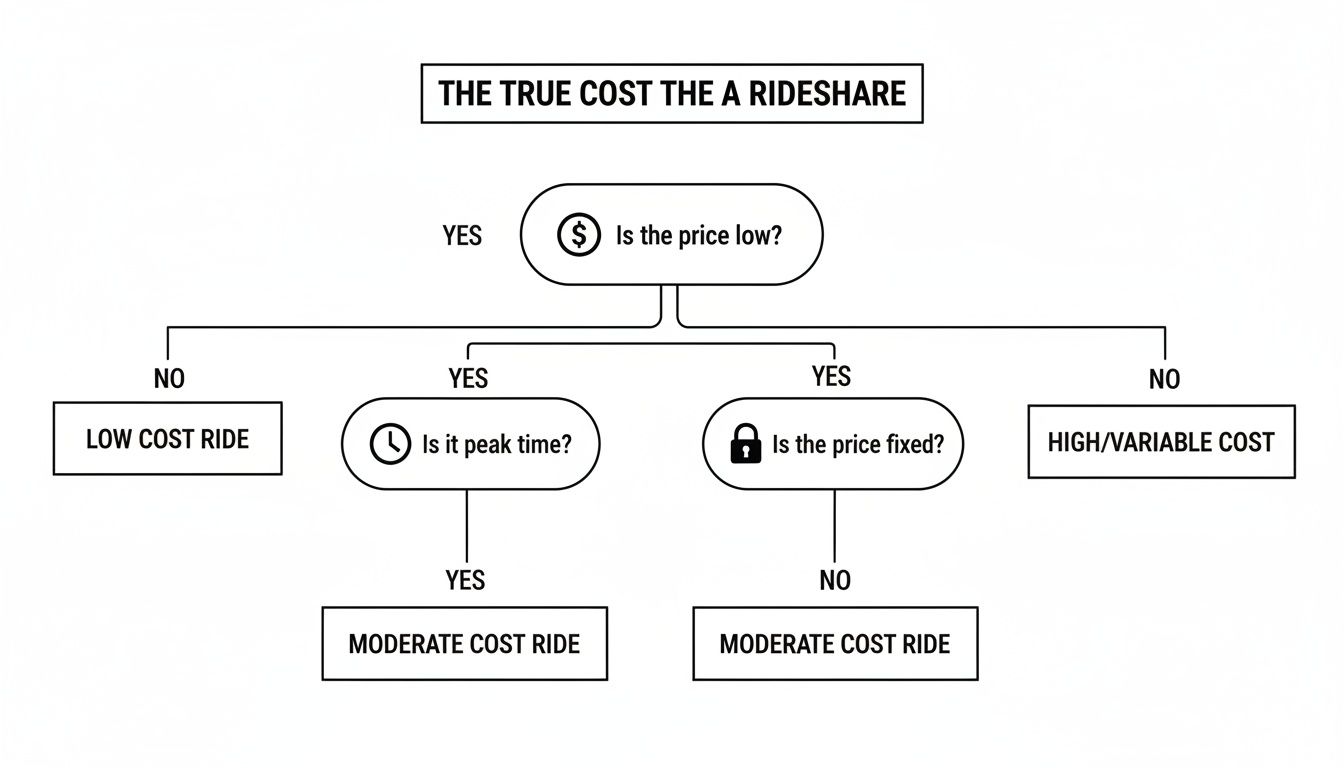
The bottom line? What you see isn't always what you pay. Surge pricing and hidden fees can inflate the cost, whereas a private transfer comes with a guaranteed, fixed price.
For First-Time Visitors Seeking a Stress-Free Arrival
Landing in a new country for the first time is a sensory overload. Trying to navigate a massive, bustling airport like GRU, deciphering a new language, and finding the right ride-share pickup zone can turn excitement into anxiety in a heartbeat.
A private transfer is the perfect antidote to that chaos.
- Personal Meet-and-Greet: Your driver is waiting for you inside the terminal, holding a sign with your name. It’s a simple touch that provides immediate reassurance.
- Local Expertise: You’re in the hands of a local professional who knows the city, the traffic patterns, and the best route to your destination.
- No Surprises: The price is locked in when you book. You don't have to worry about the meter, surge pricing, or trying to negotiate a fare.
For anyone new to a city, this service transforms a potentially stressful arrival into a calm, welcoming experience. It lets you start your trip on the right foot, without the logistical puzzles a ride sharing service can present in an unfamiliar place.
Common Airport Ride-Sharing Questions Answered
Stepping out of an airport into a new city can be a bit disorienting. The last thing you want is confusion about your ride adding to the stress. When you're using a ride-sharing app, a few common logistical questions tend to pop up. Let's clear up the practical hurdles travelers often face so you can get on your way without a hitch.
Where Do I Find My Ride at the Airport?
This is easily the biggest source of confusion. You can't just flag down your driver at the nearest curb. Big international hubs like São Paulo/Guarulhos (GRU) have designated pickup zones to keep traffic flowing and everyone safe.
Here's how to pinpoint the right spot:
- Trust the App: Your app is your best friend here. Once you book, it will almost always show you the official pickup area, sometimes even with walking directions from your terminal.
- Look for Airport Signs: Keep an eye out for signs that say "Transporte por Aplicativo" or "Ride App Pickup." They’ll point you in the right direction.
- Confirm with the Driver: Still not sure? Shoot your driver a quick message through the app. Something simple like, "Hi, just confirming pickup at Terminal 2, departures level," can clear things up instantly.
Just be ready for a short walk from baggage claim with your luggage, as these zones are often set a little way back from the main arrivals area.
What if I Can't Find My Driver?
It happens. In a chaotic airport environment with dozens of similar cars, spotting your specific ride can feel like a game of Where's Waldo. If you've been waiting a few minutes and still can't see them, don't panic.
First, check the in-app map again. Your driver might just be stuck in the airport traffic loop a minute away. If the map shows they're right there but you can't find them, use the app to call or message.
If you can't get in touch or something just doesn't feel right, your best bet is to cancel and book another ride. Your peace of mind is what matters most. The apps usually won't charge a cancellation fee if the driver is way off course or seriously late.
What's the Deal with Oversized Luggage?
This is a big one. The standard Uber or 99 is usually a sedan or a small hatchback with a trunk to match. It's not built for surfboards, ski bags, or a family's worth of giant suitcases.
If you’re traveling heavy, you've got a couple of options:
- Book a Bigger Car: Most apps have an XL or SUV option. It costs a bit more, but it’s the only way to be sure everything will fit.
- Add a Note: Some apps let you send a note to the driver when you book. A heads-up about your extra luggage gives them a chance to cancel if their car is too small, which saves everyone time and frustration.
Trying to cram too much into a small car is a recipe for a last-minute cancellation right on the curb. It’s a gamble you don’t want to take.
Can I Bring My Kids?
Policies around traveling with children, especially when it comes to car seats, can be tricky. In Brazil, safety laws are clear: kids under a certain age and size need to be in a proper child restraint. But here’s the key: ride-share drivers are independent contractors and are not required to have a car seat for you.
This means the responsibility is 100% on you to bring your own. If you show up for your ride without a legally required car seat for your child, the driver has every right—and is often legally obligated—to refuse the trip. Don't risk getting stuck at the airport; if your child needs a car seat, make sure you have it with you.
If you'd rather not deal with these uncertainties, Gru Airport Transfers handles it all for you. We ensure the right vehicle for your luggage, provide child seats when you request them, and have a driver waiting for you right in the arrivals hall. No guesswork, no stress. Book your seamless ride at https://gruairporttransfer.com.

