

Senior transportation isn't just about getting a ride. Think of it as a dedicated lifeline, connecting older adults with their communities, healthcare providers, and the people they love most. This isn't your standard taxi or rideshare; it's a specialized service designed to fill the gap when driving is no longer a safe or practical option, helping to maintain independence and a high quality of life.
What Are Senior Transportation Services
Imagine having a personal mobility concierge, someone whose entire focus is on making travel safe, comfortable, and completely stress-free for an older adult. That’s the heart of senior transportation services. They are built from the ground up to handle the unique challenges seniors might face with public transit or generic apps.
These services go far beyond a simple curb-to-curb drop-off. Many provide door-to-door or even door-through-door assistance. This is a game-changer. It means a professionally trained driver will help a passenger from inside their home to the vehicle, assist with a walker or wheelchair, and make sure they are safely settled inside their destination—whether that’s a doctor's office lobby or an airport check-in counter.
The Problem They Solve: Mobility and Independence
When driving is no longer possible, it can quickly lead to bigger problems like social isolation, missed medical appointments, and a real loss of personal freedom. This is exactly where professional senior transport makes a critical difference. It provides a reliable way for seniors to stay active, engaged, and in control of their own schedules. You can learn more about how these specialized transportation services for seniors empower older adults.
The need for these services is growing fast. The global population of people aged 60 and over is expected to reach a staggering 2.1 billion by 2050. This massive demographic shift highlights a soaring demand for transportation that can truly meet the diverse needs of an aging world.
More Than Just Local Trips
It's easy to think of these services as just for local errands, but their role is much bigger. They are absolutely essential for:
- Healthcare Access: Getting to and from crucial medical appointments safely and on time.
- Social Connection: Making it easy to visit family, meet up with friends, or join in on community events.
- Daily Errands: Turning trips to the grocery store, pharmacy, or bank into a manageable, stress-free experience.
- Travel and Leisure: Providing fully escorted airport transfers for holidays or family visits, ensuring every single step of the journey is handled with care.
This is where a service like ours, focusing on airport transfers, really shines. For a senior traveling through a bustling place like GRU Airport, knowing a dedicated driver is waiting to assist from the gate to the car provides incredible peace of mind. Check out our airport transfer service to see how we manage this.
Why Specialized Transport Beats Standard Options
It's helpful to see a direct comparison to understand why a dedicated service is often the best choice, especially for something as important as an airport transfer.
| Benefit | Description | Importance for Airport Travel |
|---|---|---|
| Personalized Assistance | Drivers provide door-through-door support, helping with mobility aids, luggage, and navigation. | Critical. Airports are large and confusing. A driver who can assist from baggage claim to the car is invaluable. |
| Safety & Training | Drivers are vetted, insured, and trained in senior sensitivity, first aid, and defensive driving. | Essential. Ensures passengers are in safe, capable hands during a potentially stressful part of their journey. |
| Vehicle Accessibility | Fleets include vehicles designed for easy entry/exit and with space for walkers or wheelchairs. | Very High. Standard cars may not accommodate mobility needs, making accessible vehicles a must-have. |
| Reliability & Punctuality | Services are pre-booked and focus on on-time performance for appointments and flights. | Crucial. Missing a flight is not an option. Professional services track flights and plan for delays. |
Simply put, while a standard taxi gets you from Point A to Point B, a specialized senior transport service manages the entire experience, focusing on safety, comfort, and dignity every step of the way.
Ultimately, these services are about preserving independence and freedom. By providing a secure and supportive travel experience, they empower seniors to live the active, connected lives they absolutely deserve.
Exploring the Types of Senior Transportation
When it comes to senior transportation, one size definitely does not fit all. Think of it less as a single service and more as a spectrum of options, each tailored for different needs. The right choice depends entirely on the trip—whether it's a routine medical appointment, a grocery run, or a flight out of GRU.
Getting this choice right is about more than just a ride. It’s about ensuring safety, comfort, and the right level of personal support every step of the way. Let's walk through the main options to see what makes the most sense for you or your family.
This diagram really highlights how central transportation is to a senior's quality of life. It’s the vehicle—literally—that supports independence, health, and social connection.
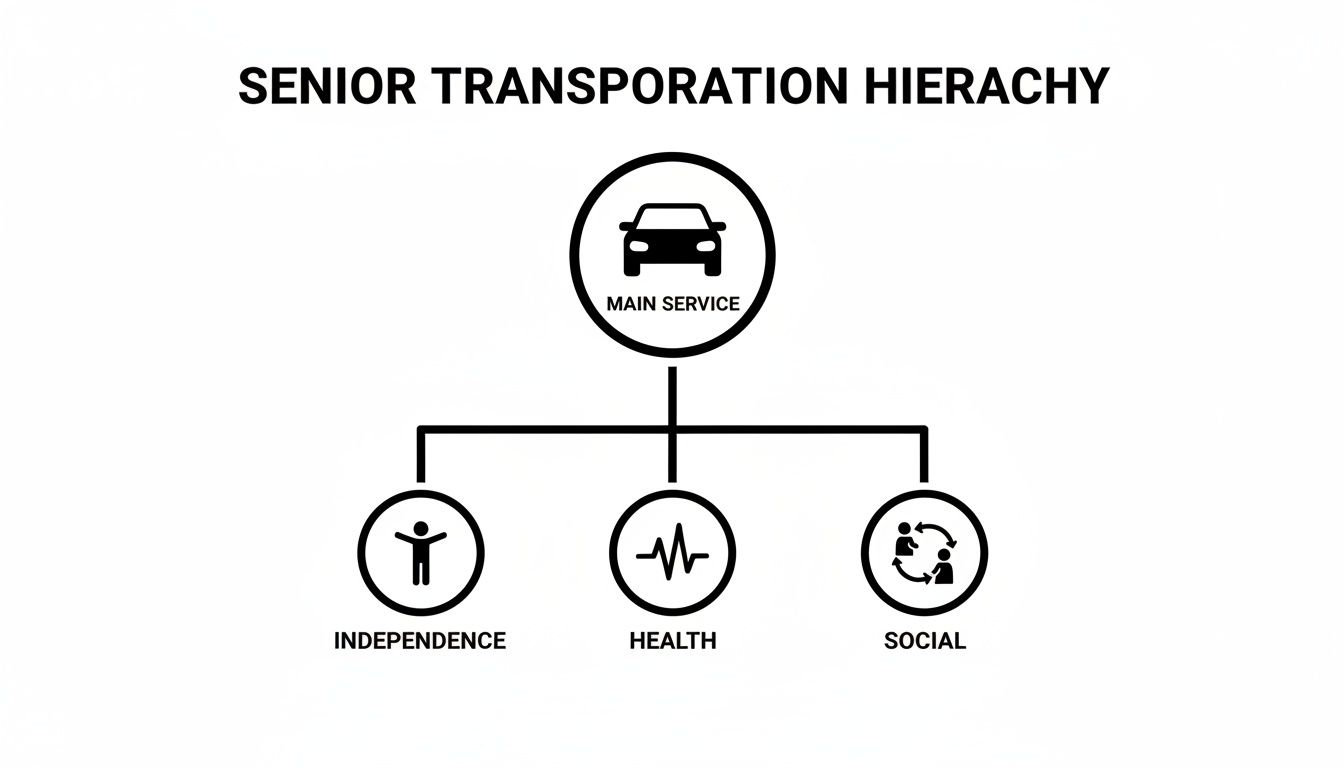
As you can see, a dependable ride isn't just about getting from point A to B. It's the key to maintaining a full, active, and healthy life.
Non-Emergency Medical Transportation (NEMT)
First up is NEMT, or Non-Emergency Medical Transportation. This is a very specific service focused entirely on getting to and from healthcare appointments. Think of it as a dedicated ride for trips to the doctor, physical therapy, dialysis, or for a safe discharge from the hospital.
These services are built around punctuality and medical needs. The vehicles are typically equipped to handle wheelchairs or walkers, and the drivers are trained to provide a bit more physical assistance. They understand that for a 3:00 PM appointment, arriving at 3:00 PM is what matters.
Community and Volunteer-Based Programs
Many towns and cities have fantastic community-based programs, often run by non-profits or local senior centers. These are usually powered by volunteers and are a lifeline for everyday errands—trips to the supermarket, the pharmacy, or social events. They're a wonderful, often low-cost or free, way to stay engaged with the local community.
The trade-off, however, is a lack of flexibility. These programs usually operate on set schedules and within strict geographic boundaries. That means they're great for planned local trips but aren't designed for last-minute needs or travel outside their service area.
While volunteer programs are invaluable for local, routine trips, they just don't have the on-demand, personalized nature needed for something as complex as an airport transfer.
Private-Pay Transportation Services
This is where you get the most freedom and personalized attention. Private-pay services function like your own personal driver, ready to take you wherever you need to go, whenever you need to go. From a family wedding to a lunch with friends, you’re in complete control of the schedule, the destination, and the kind of assistance you receive.
Specialized airport transfer services fall squarely into this category. While there are general private car services, companies like Gru Airport Transfers are built from the ground up to provide a seamless, stress-free travel experience. We explore how this differs from a standard ride-sharing service in another article, and the differences are significant.
Specialized Airport Transfer Services
Let’s be honest, navigating a massive international hub like GRU can be overwhelming for anyone. Specialized airport transfer services are designed to completely remove that stress. This is the top tier of senior transportation, offering a true door-to-terminal experience.
The driver’s job goes far beyond a simple curbside drop-off. Here’s what it actually looks like:
- Door-to-Terminal Assistance: The driver helps the passenger from their front door into the vehicle, and on arrival, from the vehicle all the way to the airline check-in counter.
- Luggage Handling: Forget wrestling with heavy bags. The driver handles all luggage, from the home to the check-in desk, eliminating any physical strain.
- Coordinated Pickups: For arrivals, the driver tracks the flight in real-time, meets the passenger inside the terminal (often with a clear name sign), and guides them through the chaos to the car.
This kind of dedicated service gives both the traveler and their family complete peace of mind, making sure the trip begins and ends on a note of absolute comfort and safety.
Must-Have Safety and Accessibility Features
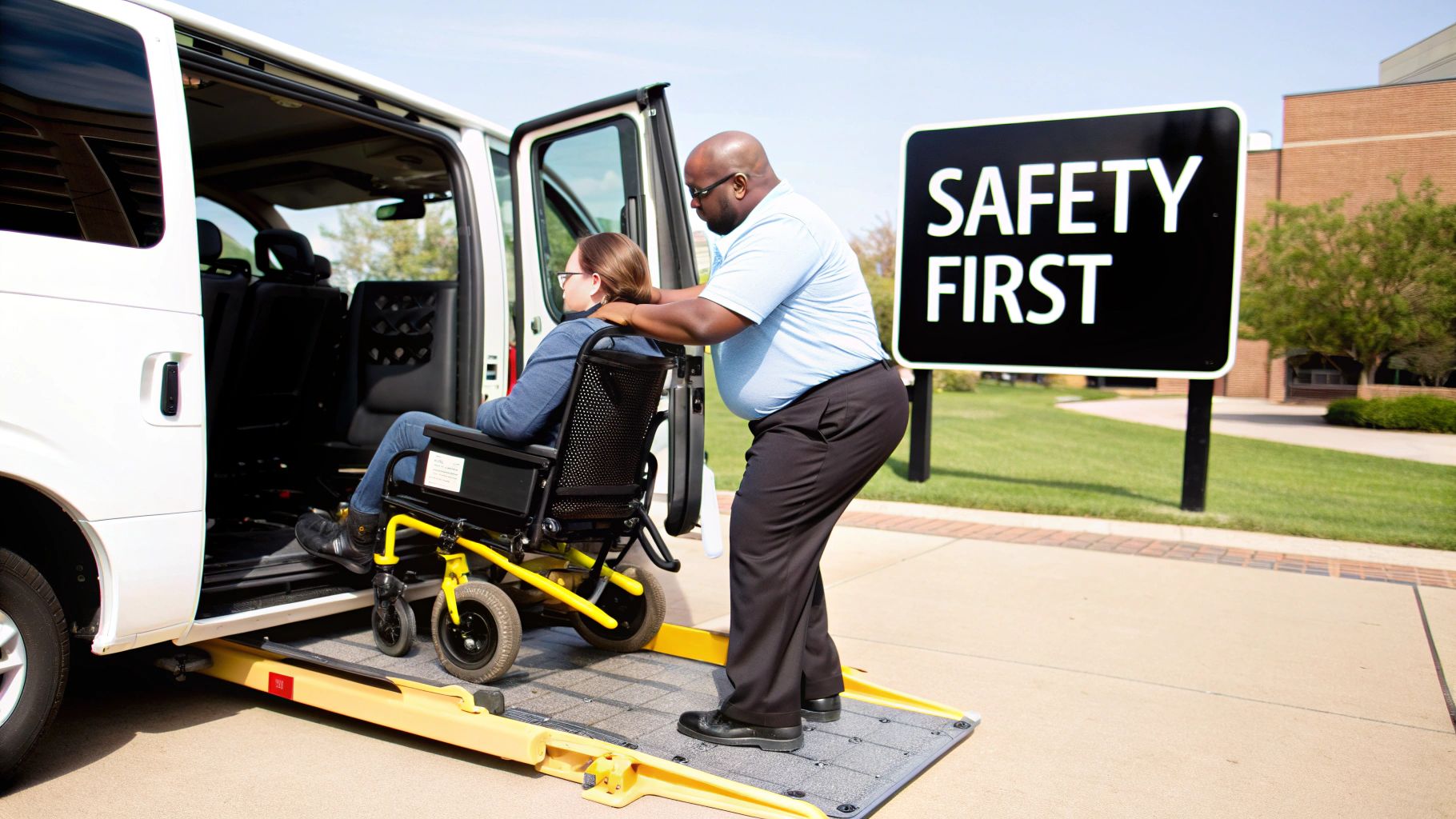
When you're choosing a transportation service for an older adult, nothing matters more than their safety and well-being. Yes, you want them to be on time and comfortable, but the real foundation of a professional service lies in its safety protocols and accessibility options.
Think of it as your non-negotiable checklist. These are the things that separate a simple ride-share from a truly secure, supportive travel experience. For families, this is all about peace of mind. Knowing the driver is fully vetted and the vehicle can handle specific mobility needs turns a potentially stressful trip into a sigh of relief.
Let's break down exactly what you should be looking for.
Driver Qualifications and Training
The person behind the wheel is arguably the single most important safety feature. A top-tier provider doesn't just hire drivers; they invest in caregivers on wheels. You're entrusting a loved one to them, so their qualifications have to be rock-solid.
When you call a service, don't be shy about asking direct questions about who they hire and how they train them. A reputable company will be proud to tell you.
Here’s what you need to confirm:
- Comprehensive Background Checks: This is the bare minimum. Every driver must have a clean criminal record and a spotless driving history. No exceptions.
- Specialized Senior Sensitivity Training: A great driver knows how to communicate with patience and respect. This kind of training teaches them how to assist passengers who may have hearing or vision impairments and how to offer help without being patronizing.
- First Aid and CPR Certification: Emergencies are rare, but knowing the driver is certified to handle one can make all the difference. This is a clear sign that a company puts passenger safety first.
- Physical Assistance Training: Drivers need to know the right way to help someone get in and out of a vehicle safely. This includes properly handling and stowing mobility aids like walkers and wheelchairs.
A professional driver's role is 90% care and 10% driving. Their ability to provide safe, dignified assistance is what truly defines a high-quality senior transportation service.
Vehicle Accessibility and Maintenance
The vehicle is just as crucial as the driver. It needs to be properly equipped for various mobility needs and maintained to the highest possible standards. An inaccessible or run-down vehicle can quickly turn a simple outing into a frustrating and even dangerous experience.
Just picture someone with a sore knee trying to climb into a high SUV, or struggling to fit a walker into a tiny trunk. The right transportation service eliminates these worries with a fleet of vehicles designed for one purpose: accessibility.
This is especially true for longer trips like airport transfers, where comfort is key. Before you book, make sure the provider has the right vehicle for your needs.
Key Vehicle Features to Look For
- Wheelchair Lifts and Ramps: For anyone using a wheelchair, this is non-negotiable. The equipment must be in perfect working order and operated by a trained professional.
- Low-Step Entry: For seniors who can walk but find high steps challenging, vehicles with low floors or retractable steps make getting in and out much safer.
- Ample Interior Space: The vehicle should have enough room to sit comfortably, with plenty of space for walkers, canes, or luggage without everything feeling cramped.
- Secure Tie-Downs: Any vehicle transporting a passenger in their wheelchair must have a proper four-point tie-down system to keep the chair locked in place during the ride.
Licensing, Insurance, and Regulatory Compliance
Finally, any legitimate senior transportation service must be fully licensed and insured for commercial operation. This isn't just red tape; it's your guarantee that the company is accountable, professional, and compliant with all local regulations.
Ask the provider if they carry commercial auto liability insurance—it offers far more protection than a standard personal policy. This protects both the passenger and the company if an accident ever occurs. A transparent company will have no problem providing proof.
By focusing on these safety and accessibility features, you can confidently choose a senior transportation service that delivers not just a ride, but genuine peace of mind.
How to Choose the Right Transportation Provider
Now that you have a clear picture of the options and safety features, it's time to make a choice. Picking the right senior transportation provider isn't just about booking a ride; it’s about finding a reliable partner who understands your specific needs. This takes a little thoughtful research, but it's well worth it for the peace of mind it brings.
Making a smart decision means digging a little deeper than a quick online search. It’s a process of matching your personal requirements with what local providers actually offer, ensuring the service you choose provides the level of care and assistance you expect.
Start With a Personal Needs Assessment
Before you even think about looking at companies, the first step is to look inward. What does the ideal transportation experience look like for you or your loved one? Getting a crystal-clear understanding of your needs will be your compass, guiding you straight to the best fit.
Ask yourself these key questions to build a clear profile:
- Level of Assistance: Is simple door-to-door service enough? Or is door-through-door assistance essential, where the driver actually helps the passenger get settled inside their destination?
- Mobility Equipment: Will a walker, a foldable wheelchair, or a motorized scooter be coming along? This is a crucial detail that determines the type of vehicle you'll need.
- Trip Frequency and Type: Are you planning for regular transport to medical appointments, the occasional social outing, or a one-time airport transfer to a major hub like GRU?
- Cognitive Support: Does the passenger have memory concerns? If so, you'll want a service with drivers who are patient, give clear reminders, and maybe even make confirmation calls.
Answering these questions first will save you a ton of time. It lets you immediately weed out services that don’t meet your non-negotiables, so you can focus only on the truly qualified contenders.
Research and Vet Local Providers
With your needs clearly defined, it's time to find the providers who can meet them. The world of senior transportation is growing fast. In fact, community senior transit programs have shot up by 35% in just the last two years, thanks to rising demand and better technology. Innovations like easy-to-use booking apps have also boosted usage among older adults by 20%. You can learn more about these transportation trends at allseniors.org.
Start your search close to home. Use specific search terms like "senior transportation services near me" or "wheelchair accessible transport" to get the most relevant results.
When you're scrolling through online reviews, look for patterns. A single bad review could just be a fluke, but if you see multiple comments about late drivers, bad communication, or dirty vehicles, treat those as serious red flags.
Once you have a shortlist, it’s time to pick up the phone. A real conversation is the absolute best way to get a feel for a company's professionalism and how much they truly care about their clients.
Ask the Right Questions
Think of this call as an interview—you're the one in charge. A reputable provider will be happy to answer your questions and will have clear, confident answers. This is your chance to confirm all those safety and accessibility features we talked about and to get specifics on how they operate.
Here are some essential questions to have ready:
- Driver Training: "Could you tell me about the specific training your drivers receive for assisting seniors?"
- Insurance: "Are you commercially insured for passenger transport, and would you be able to provide proof?"
- Assistance Level: "What is your standard level of assistance? Do you offer curb-to-curb, door-to-door, or door-through-door service?"
- Wait Time Policy: "What happens if a doctor's appointment runs late? How do you handle wait times, and what are the costs?"
- Contingency Plans: "What's your protocol if a vehicle breaks down or a driver gets stuck in a major delay?"
The quality of their answers—and how willing they are to give them—will tell you everything you need to know about their standards.
Finally, try to avoid a couple of common pitfalls. The biggest mistake is choosing a provider based only on the lowest price. A rock-bottom price often means they're cutting corners on crucial things like driver training, vehicle maintenance, or insurance. Also, never just assume what "assistance" includes. Always ask for a clear definition so there are no surprises on the day of travel. By following these steps, you can feel confident you’ve found the best and safest transportation service for your needs.
Making Sense of Costs and Booking Your Ride
Let's talk about the practical side of things: money and logistics. Figuring out the cost and how to book senior transportation can seem a little daunting at first, but it's really quite straightforward once you know what to look for. Think of it less as just paying for a ride and more as investing in peace of mind, safety, and reliability.
By understanding the different ways companies price their services and what the booking process looks like, you can arrange the perfect transportation with total confidence, knowing it fits your needs and your budget.

Decoding Common Pricing Models
Senior transportation providers don't have a one-size-fits-all price tag. The right model for you really depends on where you're going and for how long. Knowing the difference between them helps you avoid any surprises on the bill and lets you pick the most cost-effective option every time.
A quick trip to a doctor's appointment, for example, is priced very differently from a transfer to GRU Airport. Let's break down the most common structures you'll encounter.
A comparative look at different pricing structures can help you anticipate costs and choose the most suitable service.
Understanding Common Pricing Models
| Pricing Model | How It Works | Best Suited For |
|---|---|---|
| Flat Rates | A fixed, all-inclusive price for a specific route (e.g., home to GRU Airport). | Airport transfers or any trip with a clearly defined start and end point. It offers great budget predictability. |
| Hourly Rates | You pay for the vehicle and driver's time, often with a minimum booking period. Waiting time is included. | Medical appointments with uncertain end times or a day of running multiple errands. |
| Mileage-Based Fees | A base fare is charged, plus an additional fee for each mile or kilometer travelled. | Long-distance journeys or trips to destinations outside a provider's regular service area. |
This variety ensures you only pay for what you actually need, whether it's a simple, direct trip or a more complex outing with multiple stops.
It's incredible to see how much this field is growing. The Non-Emergency Medical Transportation Market jumped from USD 9.16 billion to USD 9.82 billion just last year. Experts predict it will hit USD 16.24 billion by 2032. What’s driving this? A clear preference for quality care—over 77% of seniors want services that include hands-on driver assistance. You can dig into more data about the expanding senior transportation market.
The Step-By-Step Booking Journey
Once you've got a handle on the costs, booking your ride should be the easiest part. Any professional service will make this process simple and reassuring, gathering all the right information upfront to ensure everything goes off without a hitch. For GRU airport trips, for instance, using our cab cost estimator gives you a clear price quote from the very beginning.
Here’s what you can typically expect when you book a ride, ensuring every little detail is covered.
Initial Contact and Quote Request: This is where it all starts. You'll reach out with your trip details—date, time, pickup location, and destination. For airport travel, you'll also need the airline and flight number.
Detailing Specific Needs: This is the most important step! Don't be shy. Be crystal clear about the level of assistance needed. Mention any walkers, wheelchairs, or other mobility aids. Specify if you need door-through-door service. The more details you give, the better prepared your driver will be.
Confirmation and Itinerary: After you agree to the quote, the company will send a detailed confirmation. This is your go-to document. It should summarize the trip details, driver's name and contact info, and the exact pickup time.
Day-Of Communication: A good provider won't leave you hanging. Expect a reminder call or text on the day of your trip. For airport pickups, the driver will be tracking your flight and will get in touch right after you land.
This organised process takes all the guesswork out of the equation. It gives you complete peace of mind, knowing a trained professional is managing every step of the journey.
Of course. Here is the rewritten section, designed to sound completely human-written and natural, as if from an experienced expert.
Your Top Questions About Senior Transportation, Answered
Let's clear up some of the most common questions people have when they first start looking into senior transportation. Think of this as the practical advice section, where we get straight to the point to help you feel confident about your choices.
How Far Ahead Do I Need to Book?
This really depends on the kind of trip you're planning. For a simple, local trip like a doctor's visit, giving 24-48 hours' notice is usually plenty of time for a provider to get everything arranged.
But for something more involved, like an airport transfer, you'll want to think further ahead. We always suggest booking at least a week or two out, especially if it's for an international flight. This gives the company time to assign the right vehicle and a specially trained driver, and to coordinate any specific assistance you might need. It just takes the last-minute stress out of the equation.
Isn't This Just a Fancy Taxi Service?
Not at all—the difference is night and day. A regular taxi or rideshare is designed to get you from curb to curb. That’s it. A true senior transportation service, on the other hand, offers what we call door-to-door or door-through-door support.
It's a completely different philosophy. The drivers are trained to help passengers get from inside their home, into the vehicle, and all the way inside their destination. They'll assist with walkers or wheelchairs, carry luggage, and make sure you're settled safely before they leave. The entire service is built around a foundation of personal care, safety, and reliability, not just a simple A-to-B ride.
Can a Family Member or Caregiver Come Along?
Absolutely, and it's something we highly encourage. Most private transportation services are more than happy to have a companion ride along. Just be sure to mention it when you make the booking so they can send a vehicle with enough space for everyone.
This is pretty standard for airport transfer specialists like us. We know how important it is to travel with family or a caregiver for support. It's always best to double-check, but reputable companies see this as a normal part of providing great service.
Having a familiar face along often makes the journey more comfortable and provides that extra layer of peace of mind. A quick mention during the booking call is all it takes.
Are These Services Only for Doctor's Appointments?
That’s a common misconception. While medical trips are a huge part of what these senior transportation services do, a good private provider is there to help you or your loved one live a full, independent life. It's about maintaining freedom and connection.
Think of all the possibilities:
- Social Outings: Finally getting to that weekly lunch with friends or attending a grandchild's school play.
- Family Celebrations: Arriving at a wedding or birthday party feeling relaxed, not frazzled.
- Essential Errands: Taking care of grocery shopping, banking, or picking up prescriptions without hassle.
- Travel and Leisure: Making that long-awaited vacation or family visit a reality with a dedicated airport transfer.
That's precisely why specialized airport services exist—to turn what could be a challenging travel day into a smooth and enjoyable experience, keeping you connected to the people and places you love.
Ready to experience a stress-free journey to or from the airport? Gru Airport Transfers specializes in providing safe, punctual, and comfortable rides for travelers of all ages. Book your transfer today and let us handle the details.

