

Welcome to São Paulo/Guarulhos International Airport (GRU), your gateway to Brazil and one of the busiest hubs in all of South America. Its official name is a mouthful—Governador André Franco Montoro International Airport—but for most travelers, it's simply where the Brazilian adventure begins. Arriving somewhere this big for the first time can feel like a lot, but don't worry. This guide is here to make everything simple and smooth.
Understanding Your Arrival at Sao Paulo Airport
Think of São Paulo/Guarulhos International Airport less as a building and more as a small, bustling city. As the main international airport for São Paulo, it's a massive crossroads connecting millions of people to destinations all over the globe. That scale can feel a bit daunting at first, but knowing its layout is the key to navigating it like a pro. Think of GRU as Brazil's Grand Central Station for air travel—a place where a little planning goes a long way.
This airport is the economic engine of Brazilian aviation, vital for both tourism and business. You can really feel its importance in the sheer number of people passing through.
São Paulo/Guarulhos International Airport has firmly established itself as Brazil's busiest airport. In a recent year, GRU handled an incredible 43.5 million passengers—a solid 6% jump from the 41.3 million it saw the year before. You can dive deeper into its operations by exploring the airport's official statistics.
With that many travelers, the airport is a constant hive of activity. Knowing your way around before you even land makes all the difference.
Key Features of GRU
To get your bearings, it helps to understand the basic building blocks of the Sao Paulo airport experience. These are the key things you'll encounter on your journey through GRU:
- Three Main Terminals: The airport is split into Terminals 1, 2, and 3. Each one serves different airlines and destinations, so knowing which terminal you're flying into or out of is step one for a hassle-free trip.
- Getting Between Terminals: Free shuttle buses run 24/7 between all terminals, making it easy to catch a connecting flight without ever having to leave the airport.
- Plenty of Onward Travel Options: Whether you prefer ride-sharing apps, official taxis, buses, or trains, you'll find plenty of ways to get into the city.
Here’s a little preview of the welcome you can expect when you touch down.
This sign is more than just a greeting; it’s your first step into one of South America's most exciting travel hubs. Before we get into the nitty-gritty of each terminal, you can get a great overview of the entire airport by taking a look at our detailed GRU airport map.
How to Navigate GRU's Terminals Like a Pro
Getting a handle on the layout of São Paulo's Guarulhos Airport is the first step to a stress-free travel day. Instead of thinking of GRU as one giant, confusing building, picture it as three separate neighborhoods, each with its own character and community of airlines. Knowing your terminal is like knowing the right address—it saves you from wandering around and wasting precious time.
The airport is organized to handle different kinds of travel. Each terminal serves a specific group of destinations and airlines, which really helps manage the flow of people. Let’s walk through the setup so you know exactly where you need to be.
H3: Terminal 1: The Domestic Hub
Terminal 1 is the smallest and most straightforward of the bunch. It's dedicated entirely to domestic flights within Brazil, and it's pretty much the home base for Azul Linhas Aéreas. If you're hopping on a flight with Azul to another Brazilian city like Rio de Janeiro, Salvador, or Recife, this is your spot.
Because it only deals with domestic travel, things tend to move a bit faster here. You won't have to navigate the large customs and immigration halls you'll find in the international terminals. Its compact size makes for a quick and easy journey from the check-in counter to your gate.
H3: Terminal 2: The Busiest Crossroads
Terminal 2 is the original and largest part of GRU, acting as the airport's bustling heart. It handles the lion's share of domestic flights from major players like GOL Linhas Aéreas and LATAM Brasil. It's also the gateway for many flights to and from other countries in Latin America.
Think of Terminal 2 as a major downtown district with two main wings (East and West) spreading out from a central check-in area. It can definitely feel crowded, but the signage is good. Given its size and the sheer number of flights it handles, it's always a good idea to give yourself a little extra time when you're flying out of here. For a deeper dive into its layout, you can learn more about all the Guarulhos airport terminals in our detailed guide.
H3: Terminal 3: The International Gateway
Terminal 3 is the newest and most modern of GRU's facilities, having opened back in 2014. It is designed exclusively for long-haul international flights, connecting São Paulo with destinations across North America, Europe, Asia, Africa, and the Middle East. If you're flying with a major international carrier like American Airlines, Delta, United, Air France, British Airways, Emirates, or Lufthansa, this is where you'll be.
The design is spacious and efficient, built to handle all the procedures that come with international travel. This is where you'll find the main passport control, customs, and a great selection of duty-free shops and premium lounges. The whole experience just feels more streamlined and relaxed compared to the older terminals.
The key takeaway is simple: check your airline and destination. Domestic flights are in T1 or T2. Short-haul international flights are usually in T2. And nearly all long-haul international flights depart from T3.
To make things even easier, here's a quick-glance table to help you find your way.
GRU Airport Terminal and Airline Guide
This table is a handy reference to quickly see which terminal your airline is likely to use at GRU.
| Terminal | Primary Use | Key Airlines |
|---|---|---|
| Terminal 1 | Domestic Flights | Azul Linhas Aéreas |
| Terminal 2 | Domestic & Latin America | GOL, LATAM, Aerolíneas Argentinas, Copa Airlines |
| Terminal 3 | Long-Haul International | American, Delta, United, Air France, Emirates, LATAM (select int'l) |
Always double-check your ticket, of course, but this gives you a great head start.
H3: Connecting Between Terminals
So, what happens if your connecting flight leaves from a different terminal? Don't sweat it. São Paulo Airport has you covered with a free shuttle bus service that runs 24/7, connecting all three terminals. The buses are clearly marked and circle continuously, stopping just outside the arrivals level of each terminal.
A few things to keep in mind:
- Frequency: The buses usually come around every 15-20 minutes, but this can change a bit depending on how busy the airport is.
- Travel Time: The trip between neighboring terminals (like from T2 to T3) is short—usually under 5 minutes. A full loop from T1 all the way back around takes about 15 minutes if traffic is light.
When you're planning a connection, always build in enough time to get off your plane, walk to the shuttle stop, wait for the bus, and ride to the next terminal. As a rule of thumb, I'd suggest allowing at least 30-40 minutes just for the terminal transfer itself. That's before you factor in going through security again for your next flight.
A Step-by-Step Guide to Arrivals and Departures
Walking through a massive international hub like São Paulo Airport can feel a little overwhelming, especially if it’s your first time. But don't worry—the process is much simpler than it looks. Think of it as a well-marked path; once you know the stops along the way, the journey becomes a breeze.
Let's walk through exactly what you can expect, whether you're just landing in Brazil or heading home. Knowing the flow will help you move through the airport with confidence, sidestep common hold-ups, and give you more time to relax.
Arriving at GRU on an International Flight
The moment you step off your plane, your first mission is to clear immigration and passport control. Just follow the big blue signs for "Imigração." This is where you officially enter Brazil, so Federal Police officers will need to see your travel documents.
Keep your passport handy. The officer might ask a few simple questions, like why you're visiting and how long you'll be staying. Once they're satisfied, you'll get that coveted entry stamp in your passport. Welcome to Brazil!
Next up is baggage claim, signed as "Restituição de Bagagem." Glance at the overhead screens to find which carousel has your flight's luggage. Waiting times can be unpredictable, so it's a good time to hop on the airport Wi-Fi and let someone know you've landed.
Pro Tip: Hang onto that little baggage claim sticker they gave you at check-in. Airport staff sometimes do quick checks on the way out to make sure everyone's walking away with their own bags.
With your luggage in hand, the final step is customs ("Alfândega"). For most travelers, this is easy. If you have nothing to declare, head straight for the green channel: "Nada a Declarar." If you're carrying goods over the duty-free allowance, you'll need to go through the red channel, "Bens a Declarar."
If you have a connecting flight, figuring out how to get between terminals is key. This is a common situation for travelers landing internationally and then flying to another city in Brazil.
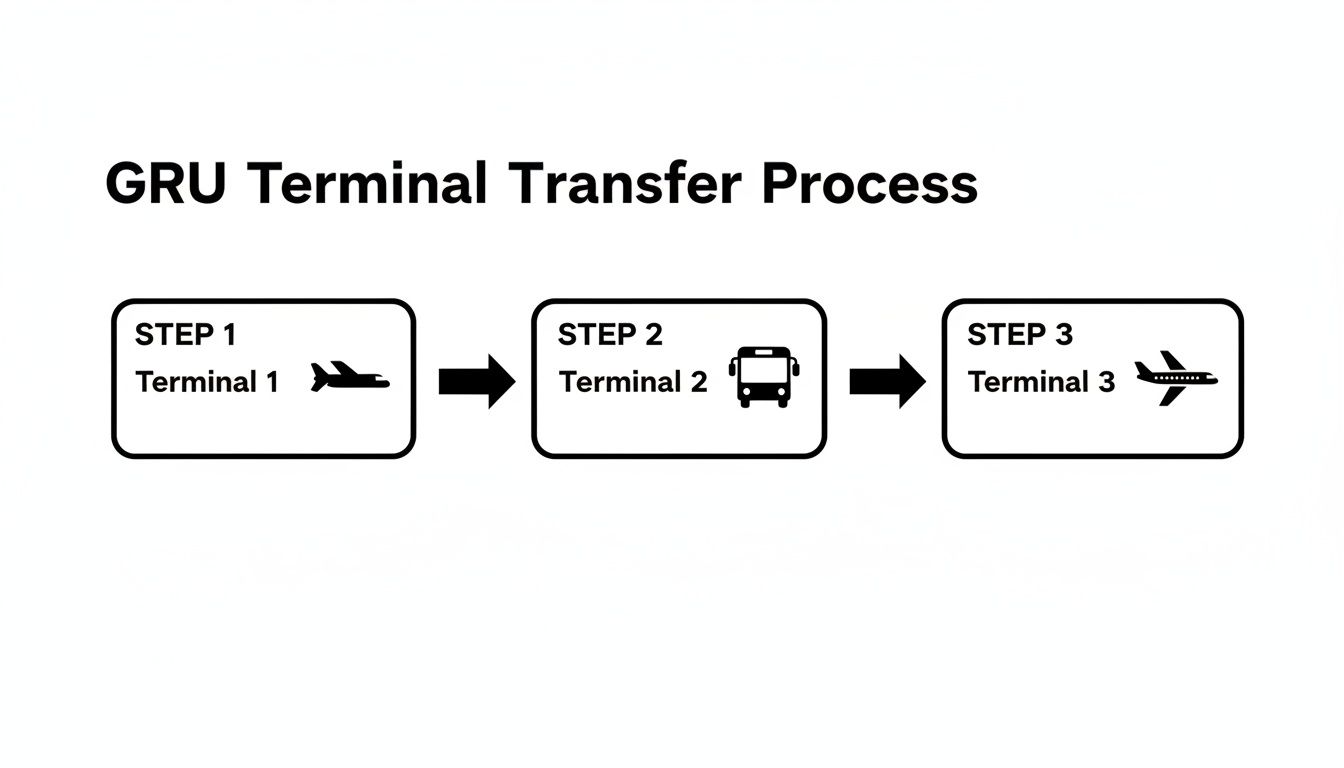
The flowchart above shows just how straightforward it is. You'll simply hop on the free shuttle bus to get from your international arrival terminal (likely Terminal 3) to your domestic departure terminal (Terminal 1 or 2).
Departing from Sao Paulo Airport
When it's time to leave, the process kicks off with check-in. Most airlines now push for online check-in, which you can usually do up to 24 hours before your flight. I highly recommend it—you can just use the faster bag-drop line instead of waiting in the full check-in queue.
After you've dropped your bags, it's time for security screening. This is the standard procedure: laptops and other big electronics come out of your bag, and everything goes into a tray to be X-rayed.
Remember the global rules for liquids in your carry-on:
- Small Bottles Only: Any liquids, gels, or aerosols must be in containers of 100 ml (3.4 ounces) or less.
- One Clear Bag: All these little bottles have to fit inside a single, transparent, and resealable one-liter plastic bag.
- One Bag Per Traveler: You only get one of these liquid bags per person.
If you're flying internationally, you have one more checkpoint: exit passport control. A Federal Police officer will check your passport and boarding pass one last time, giving you a departure stamp to officially log you as leaving Brazil. It’s usually much faster than the immigration line on arrival.
Once you’re through, you’re in the main departures lounge. This is the "airside" part of the airport where you'll find your gate, along with plenty of duty-free shops, restaurants, and lounges. Find a spot to relax, but always keep an eye on the flight information screens in case of a last-minute gate change.
Choosing Your Ride: How to Get from GRU Airport into São Paulo
You’ve made it through baggage claim and customs—congratulations! Now comes the next puzzle: getting from the airport into the massive city of São Paulo. It can feel a little overwhelming at first, but GRU has a solid lineup of transportation options. The best one for you really boils down to what you value most. Are you on a tight budget? Or is a fast, stress-free ride your top priority?
Let's walk through the pros and cons of each choice so you can pick the right one for your trip.
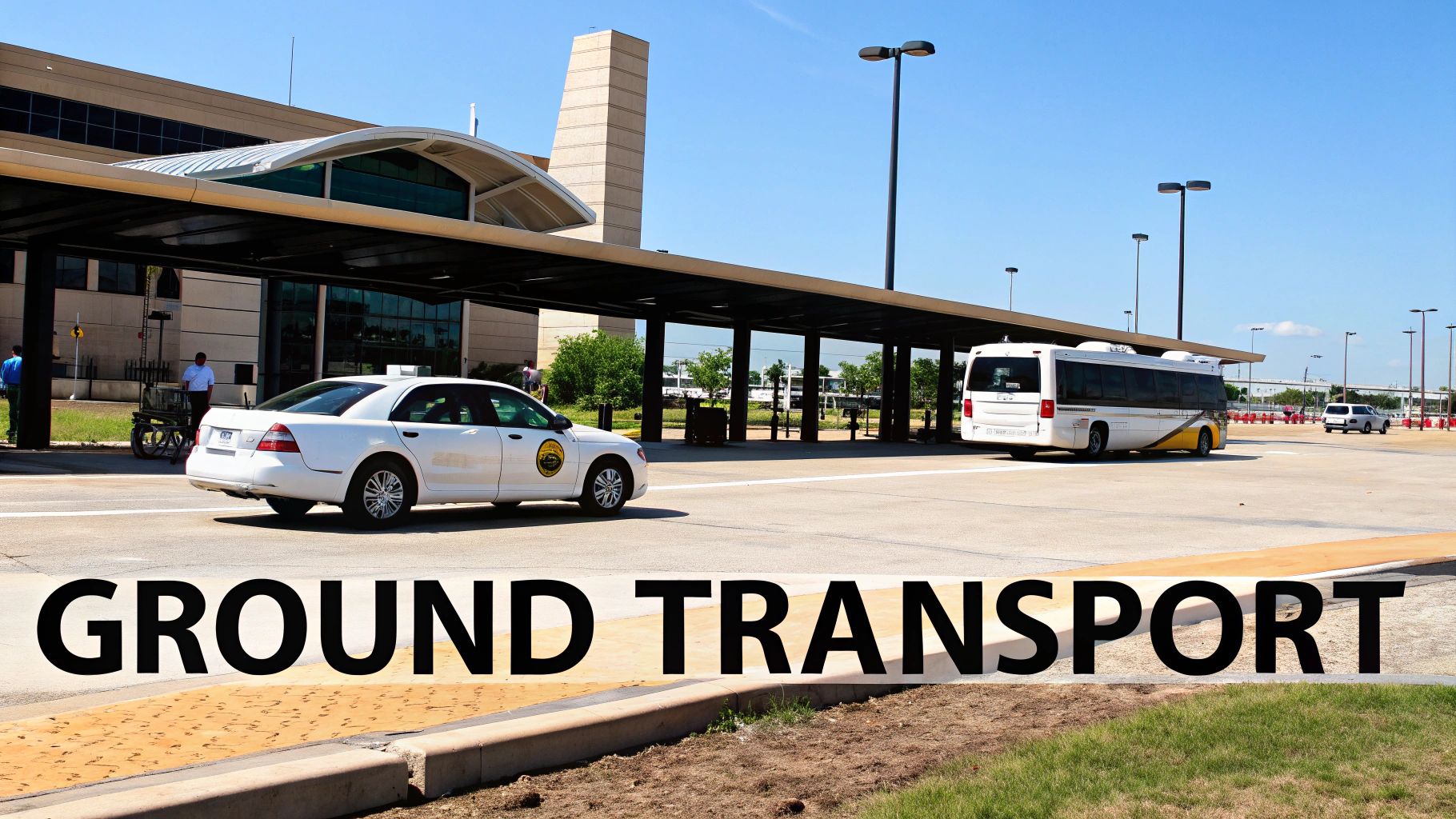
Ride-Sharing Apps Like Uber and 99
For many travelers, firing up a familiar app like Uber or its popular Brazilian counterpart, 99, is muscle memory. It's a convenient system: you book on your phone and head to the designated pickup spots outside each terminal. Easy.
But there's a catch. These apps use dynamic pricing, which means fares can shoot up during rush hour, a sudden rainstorm, or just because demand is high. You’ll also need a working internet connection right away, which can be tricky if you're fumbling with airport Wi-Fi or haven't set up a local SIM card yet.
Official Airport Taxis
If you prefer a more straightforward approach, the official airport taxis are your best bet. You’ll see licensed company booths right in the arrivals area where you can pay a fixed price for your ride. The biggest plus here is transparency—you know exactly what you're paying before you even get in the car, so São Paulo's infamous traffic won't affect your fare.
This reliability comes at a price, as taxis are generally more expensive than ride-sharing services. Still, for peace of mind and a simple, no-fuss process, many find it's worth the extra cost.
Public Transport: Train and Bus
Traveling on a budget? The public transit system is your friend. The CPTM train is a fantastic option because it connects directly to the city’s metro network from Terminal 1, letting you bypass road traffic completely. If you land at Terminals 2 or 3, a free airport shuttle will get you to the train station.
Buses are another wallet-friendly choice, from local lines to the more comfortable executive Airport Bus Service. They’ll get you there, but be prepared for a potentially slow journey, especially if you hit the city's notorious rush-hour gridlock. This is a great choice if you’re traveling light and aren't in a hurry.
As Brazil's busiest airport, GRU is a massive operation. It recently saw over 38 million passengers in a single year, dwarfing other major Brazilian hubs like Congonhas and Brasília. You can get a closer look at Brazil's booming air travel statistics on VisaHQ.com.
Pre-Booked Airport Transfers
If your goal is absolute comfort and zero hassle, a pre-booked airport transfer is the way to go. This is the VIP treatment, designed to make your arrival completely seamless. Picture this: you walk out into the arrivals hall, and a driver is waiting for you, holding a sign with your name on it. They help with your bags and lead you straight to a clean, private car.
This service really shines for a few key reasons:
- Fixed Pricing: The price is locked in when you book. No surge charges, no hidden fees. It makes budgeting your trip that much easier.
- Guaranteed Ride: Your car is reserved and waiting just for you. Forget about long taxi lines or endlessly refreshing a ride-share app.
- Professional Service: You get an experienced driver who knows the city and is dedicated to getting you to your destination safely and comfortably.
A pre-booked transfer is a game-changer for business travelers needing to get to a meeting, families juggling kids and luggage, or frankly, anyone who just wants to relax after a long flight. It takes all the guesswork out of that last leg of your journey. If a smooth, predictable start sounds good, you may want to look into arranging a private transfer from Guarulhos Airport.
Insider Tips for a Better Airport Experience
Navigating a massive international hub like São Paulo Airport can feel overwhelming, but it doesn't have to be. A few simple tricks can turn a potentially stressful layover into a smooth, even pleasant, part of your trip. Whether you're a business traveler on a tight schedule or a family juggling kids and carry-ons, these insider tips will help you conquer GRU like a pro.
Advice for Business Travelers
When you're traveling for work, every minute counts. The goal is to eliminate friction and stay productive from the moment you step out of your taxi until you're settled in your seat.
Your first move should be to find an airport lounge. Terminal 3's international departure area is your best bet, with great options like the LATAM VIP Lounge or the American Airlines Admirals Club. They offer a quiet oasis with reliable Wi-Fi, comfortable workspaces, and complimentary food and drinks—perfect for catching up on emails away from the chaos of the main terminal.
To breeze through security, think like a minimalist. Keep your travel documents and passport in an easily accessible pocket. When packing your carry-on, place your laptop and liquids at the very top so you can pull them out in seconds. It’s a small habit that saves a surprising amount of time.
Making Travel Easy for Families
Traveling with kids brings its own unique set of challenges, but a little planning goes a long way at São Paulo Airport.
Look for the dedicated family restrooms in Terminals 2 and 3. They offer far more space and privacy than the standard ones, which is a lifesaver when you're dealing with strollers, car seats, and antsy toddlers. You'll also find a few play areas where the kids can burn off some pre-flight energy.
Don't lug your stroller and car seat all the way through the airport. Check your airline's gate-check policy beforehand. Most will let you use your stroller right up to the boarding door and then stow it for you, which is infinitely easier than checking it with your main luggage.
A common headache for international travelers is communication. Figuring out how to stay in touch with family back home or coordinate with your hotel can be tricky. Before you land in São Paulo, it's smart to have a plan. Learn the best way to call internationally to sidestep those shocking roaming fees.
Tips for Every Traveler
No matter why you're flying, these universal tips will make your time at GRU much smoother.
First, be smart about money. Airport currency exchange counters are convenient, but their rates are rarely in your favor. A good strategy is to exchange just enough cash for immediate needs—like a coffee or a bus ticket—and then withdraw more from an ATM in the city for a much better exchange rate.
If you're stuck with a long layover, don't just sit at the gate. Go explore! Terminal 3 has a great selection of shops and restaurants. You can find everything from a quick snack to a proper sit-down meal featuring authentic Brazilian dishes, which beats airport fast food any day.
Finally, stay connected. GRU offers free Wi-Fi, which is fine for sending a quick message or checking flight updates. But if you need to stream a movie or join a video call, it's worth paying for a premium pass to get a faster, more stable connection.
Your São Paulo Airport Questions, Answered
Even the most seasoned traveler has a question or two when flying through a massive hub like São Paulo Airport. To make sure you feel confident and prepared, we've compiled answers to the most common questions we hear from people just like you. Think of this as your go-to cheat sheet for navigating GRU like a pro.
How Early Do I Really Need to Be at GRU?
That old saying about giving yourself more time than you think you need? It was practically invented for GRU. For international flights, aim to walk through the terminal doors 3 to 4 hours before your departure time. That might sound like a lot, but it's a realistic buffer for airline check-in, dropping your bags, getting through security, and then clearing passport control. Queues can get surprisingly long, especially during peak travel times.
If you’re flying within Brazil, you can relax a little. Arriving 2 hours ahead of a domestic flight is usually plenty of time since you get to skip the exit immigration lines. Still, always double-check what your airline suggests, particularly around holidays when the airport is buzzing.
Rushing through an airport is a guaranteed way to start your trip stressed out. Arriving early turns that frantic dash into a relaxed wait, giving you time to grab a coffee, browse the shops, or just find your gate and chill before boarding.
Can I Get Free Wi-Fi at the Airport?
Yes, absolutely. São Paulo Airport offers free Wi-Fi to keep you connected. Just look for the network named “GRU WI-FI” on your device and follow the simple on-screen instructions to get online.
The free service usually comes in timed chunks—often an hour at a time. When your session runs out, you can typically just log back in for another free block. It’s perfect for checking emails, sending messages, or quick web browsing. If you need to stream video or download big files, you might want to consider the paid premium Wi-Fi options, which offer much faster and more stable connections.
What's the Best Way to Get from GRU to Congonhas Airport (CGH)?
Lots of travelers need to connect between São Paulo's two major airports. Thankfully, you've got a few solid options, each with its own trade-offs between cost, speed, and ease.
Here’s a quick rundown of your choices:
- Airport Bus Service: This is a very popular and budget-friendly option. Direct buses run frequently between the airports. They're comfortable, have plenty of room for your bags, and are a great all-around choice.
- Taxis & Ride-Sharing: For a direct, private trip, you can grab an official airport taxi or use an app like Uber or 99. Outside of São Paulo's notorious rush hour, this is often the quickest way to get there.
- Pre-Booked Private Transfers: If you want zero stress and total predictability, this is the way to go. Your driver will be waiting for you, the price is locked in, and you’ll get a seamless door-to-door ride without any guesswork.
Can I Exchange Money at GRU Airport?
You sure can. You'll find currency exchange desks (look for signs that say "câmbio") and ATMs in all three terminals. They’re conveniently located in both the public arrivals halls and inside the secure departure areas.
While it's incredibly convenient for getting some Brazilian Reais (BRL) as soon as you land, keep in mind that airport exchange rates are rarely the best. A smart move is to exchange just enough for a taxi or some snacks at GRU, and then get more cash from an ATM or an exchange house in the city, where you'll likely get a much better rate.
Are There Lockers for My Luggage?
Yes, there are! If you have a long layover and want to explore the city without dragging your suitcases around, you can use the luggage storage service. You'll find the "guarda-volumes" facility in the arrivals area of Terminal 2.
You can store your bags securely for just a few hours or even a few days. The cost usually depends on the size of your luggage and how long you need to store it. It's a fantastic option for making the most of a layover.
Do I Need a Visa to Visit Brazil?
This is a big one, and the answer completely depends on your passport. For years, citizens from places like the USA, Canada, and Australia could visit Brazil visa-free.
However, travel policies change. Brazil has announced plans to bring back visa requirements for citizens of those countries, with the new rules expected to take effect in early 2025. Because these things can be updated at any time, it is absolutely essential to check the latest visa rules with the nearest Brazilian embassy or consulate long before you book your trip. This will save you a massive headache at immigration.
At Gru Airport Transfers, we believe that getting from the airport to your destination should be the easiest part of your trip. Let us handle the traffic so you can lean back and get excited for your time in São Paulo. Book your comfortable, stress-free ride with us today at https://gruairporttransfer.com.

