

So, you're planning a trip to Rio de Janeiro. Get ready for an adventure. This city is an incredible mix of jaw-dropping natural beauty and a culture that practically buzzes with energy. From the iconic Christ the Redeemer statue watching over the city to the samba beats spilling out of Lapa's bars, this guide is here to walk you through it all. My goal is to help you plan a trip to the Cidade Maravilhosa (Marvellous City) that you'll never forget.
Why Plan a Tour in Rio de Janeiro

Rio is a city of wild contrasts. You've got massive granite mountains dropping straight into the ocean, sprawling urban rainforests, and those world-famous golden beaches. Putting a bit of thought into your itinerary is the key to truly experiencing this magic. A good plan means you can hit the big-name attractions while still leaving room for those spontaneous moments that make a trip special.
And you're not the only one with Rio on your mind. The city’s popularity is undeniable. In the first half of 2025 alone, Rio saw 6.8 million visitors—that’s a 20% jump from the year before. The number of international tourists shot up by a staggering 52.1%, proving its spot as a must-see destination. With numbers like these, planning ahead isn't just a good idea; it's essential.
To get you started, here’s a quick overview of what to think about before you book anything.
Quick Guide for Your Rio de Janeiro Tour
| Planning Aspect | Recommendation & Key Details |
|---|---|
| Best Time to Visit | December–March for Carnival and peak energy. April–May or September–November for great weather with fewer crowds. |
| Must-See Attractions | Christ the Redeemer, Sugarloaf Mountain, Copacabana and Ipanema Beaches, Selarón Steps, Tijuca National Park. |
| Getting Around | The Metro is great for the South Zone. Ride-sharing apps and taxis are widely available. Pre-book airport transfers for a hassle-free arrival. |
| Safety | Stay aware of your surroundings, especially in crowded areas. Avoid displaying expensive items. Stick to well-known neighbourhoods at night. |
| Trip Length | Aim for at least 4-5 days to cover the main highlights without rushing. 7 days is ideal for a more relaxed pace. |
This table gives you the basics, but the real magic is in the details.
Best Time for Your Visit
The timing of your trip can completely change your experience in Rio. The high season, running from December to March, is electric. This is when Carnival happens, and the city is absolutely buzzing. The trade-off? Big crowds and higher prices for everything.
If you're after a more chilled-out vibe, the shoulder seasons are your best bet.
- April to May: The weather is still warm and pleasant, but the summer crowds have thinned out.
- September to November: Spring in Rio is beautiful. The days are sunny and perfect for exploring the city on foot.
These months strike a fantastic balance. You get all the sunshine you need for beach days and sightseeing, but without feeling overwhelmed by the peak-season chaos.
A well-paced trip is key. Trying to see everything in one day leads to exhaustion. Instead, group attractions by neighbourhood to minimise travel time and maximise enjoyment, giving you the freedom to truly soak in the atmosphere of each location.
Getting Started with Your Trip Logistics
The real planning starts before you even step on the plane. Most international flights land at either Galeão International Airport (GIG) or the more central Santos Dumont Airport (SDU). If your journey takes you through São Paulo first, organising a reliable Guarulhos Airport transfer ahead of time is a smart move for a seamless connection to Rio.
Once you’re in the city, getting around is pretty straightforward. The Metro is efficient and perfect for zipping between downtown and the South Zone beaches like Copacabana and Ipanema. Ride-sharing apps and official taxis are everywhere, but I always recommend pre-booking your airport transfer. There’s nothing better than seeing a driver with your name on a sign after a long flight.
We've designed this guide to help you build your perfect trip from the ground up. We'll start with the essentials and then dive into a day-by-day itinerary that you can adapt. By getting a handle on the city's layout, the best times to go, and the logistical basics now, you're setting yourself up for an incredible tour of Rio de Janeiro.
Crafting Your Perfect Rio Itinerary
Getting your day-to-day plan right is the secret to a great trip to Rio. I've designed this itinerary to give you a real taste of the city, mixing the must-see landmarks with the vibrant, local culture so you get a full picture without feeling like you're just running from one spot to the next.
We'll strike a balance between hitting the big sights and leaving room for those spontaneous moments of discovery.
This kind of organised plan is more important than ever. Rio is back on the map in a big way, with international tourism jumping by over 113% in the last couple of years. All those extra visitors mean the famous spots can get seriously crowded, so having a smart strategy is key. You can read more about Rio's tourism boom and what it means for your trip.
Day 1: Conquering Rio's Iconic Peaks
Your first full day is all about those postcard views that scream "Rio!" We're going to tackle two of the most famous attractions on the planet, and we'll start early to sidestep the worst of the crowds.
First thing in the morning, make a beeline for Christ the Redeemer. Sitting proudly atop Corcovado Mountain, this massive Art Deco statue delivers some truly mind-blowing panoramic views. The trick is all in the timing. Your goal should be to catch one of the first cog trains up the mountain, which start chugging along around 8:00 AM. You absolutely have to book your ticket online in advance; it's the only way to lock in your spot and skip the inevitable long lines.
The train ride itself is part of the experience, climbing steeply through the lush Tijuca Forest. By getting up there early, you'll have a much more peaceful visit before the midday rush descends, giving you space to properly soak in the 360-degree spectacle of the city, from the legendary Maracanã Stadium all the way out to Guanabara Bay.
Afternoon Ascent to Sugarloaf Mountain
After grabbing some lunch, it's time for the day's second major climb: Sugarloaf Mountain (Pão de Açúcar). This is a two-part adventure, involving a couple of thrilling cable car rides that offer better and better views the higher you go. The first leg takes you to Morro da Urca, a smaller peak that’s a destination in its own right, with walking trails, places to eat, and even a spot where you can often see little marmoset monkeys playing.
From there, the second cable car whisks you to the summit of Sugarloaf itself. I always recommend timing this to arrive about an hour before sunset. This gives you the chance to watch the sun dip below the mountains, painting the entire city in a stunning golden light. It’s a moment you won’t forget and the perfect cap to your first day.
My Pro Tip: As you're getting on the cable cars, try to snag a spot right by a window. The views on the way up and down, especially looking back towards Copacabana Beach, are just as breathtaking as the ones from the top.
Day 2: Sun, Sand, and Carioca Culture
Today is all about diving headfirst into Rio’s world-famous beach culture. And trust me, it’s so much more than just laying on the sand; it's about watching the vibrant, energetic life that plays out along the city’s stunning coastline.
Kick off your day at Copacabana Beach. Its iconic, wavy black-and-white promenade is an attraction in itself. You can go for a long walk, rent a bike, or just find a good spot on the golden sand to people-watch. This is where you’ll see locals locked in intense games of footvolley, vendors hawking everything from grilled cheese on a stick (queijo coalho) to caipirinhas, and a true cross-section of society soaking up the sun.
From there, it’s just a short walk over to the neighbouring Ipanema Beach, which generally has a slightly more upscale and laid-back vibe than Copacabana. Separating the two is Arpoador Rock, a fantastic place to catch the sunset. Ipanema is known for its postos (lifeguard posts), which act as unofficial markers, dividing the beach into different cultural zones. Find a beachfront barraca (stall), rent a chair and an umbrella, and order a fresh coconut water (água de coco)—they'll chop it open for you right there.
Day 3: Artistic Flair and Rhythmic Nights
For your third day, let’s explore the bohemian soul of Rio. We’ll wander through colourful, artsy streets before diving into the world of samba.
Start your morning by heading up to Santa Teresa, a wonderfully charming hilltop neighbourhood filled with winding cobblestone streets, artists' studios, and grand old mansions. The absolute best way to arrive is on the iconic yellow tram (Bonde de Santa Teresa), which clatters across the historic Carioca Aqueduct. Once you're there, just spend time getting lost, popping into little artisan shops, and enjoying the district's wonderfully relaxed atmosphere.
From Santa Teresa, you're just a short walk from one of Rio’s most beloved and photographed landmarks: the Escadaria Selarón. These incredibly vibrant, mosaic-covered steps were the passion project of Chilean artist Jorge Selarón. Each of the 215 steps is covered in colourful tiles from over 60 countries around the world, creating a stunning public art installation. It gets busy with people trying to get the perfect photo, but its unique, joyful beauty is something you have to see for yourself.
As evening sets in, wander over to the adjacent neighbourhood of Lapa. Instantly recognisable by its massive white arches (the Carioca Aqueduct), Lapa is the undisputed epicentre of Rio's nightlife and the historical heart of samba. The whole area just explodes with energy after dark, with countless bars and clubs pumping out live music. Find a traditional samba club, grab a caipirinha, and just let the incredible rhythm of Brazil's most famous music take over. It’s the perfect, high-energy finale to your tour of Rio.
Getting Around Rio Like a Local
Figuring out how to get around a massive city like Rio can feel intimidating at first, but you'll get the hang of it quickly. A little bit of planning, especially for your arrival, goes a long way in making sure your trip starts off smoothly.
When you land, you'll most likely be at either the international airport, Galeão (GIG), or the domestic one, Santos Dumont (SDU), which is right in the city centre. From either, you’ve got options. You can grab one of the official airport taxis that offer fixed, pre-paid rates—a great, no-haggle choice for peace of mind. Or, you can use a ride-sharing app like Uber or the popular local alternative, 99. They're usually cheaper, but watch out for surge pricing during peak hours. Honestly, after a long-haul flight, nothing beats pre-booking a private transfer and seeing a driver waiting with your name on a sign.
This is a great visual for how a well-planned itinerary, combined with smart transport choices, helps you flow from one iconic Rio experience to the next.

The key takeaway here is to group your activities by neighbourhood—like tackling the famous peaks one day, the beaches another, and the historic centre on a third. This cuts down on travel time and lets you really soak in each part of the city.
Your Day-to-Day Transport Options
Once you're settled in, how you get around each day will really depend on where you're going. For moving between the South Zone (where you'll find Copacabana and Ipanema) and the historic Centro, the Rio Metro is your absolute best bet. It’s clean, efficient, and, most importantly, air-conditioned. It's the secret to skipping the city’s legendary traffic.
For spots the metro doesn't reach, you're not stuck. The bus system is huge, but figuring out the routes can be a challenge for a first-timer. A much better option for the downtown area is the VLT (Veículo Leve sobre Trilhos). This sleek, modern tram connects Santos Dumont Airport with must-see spots in Centro, like the stunning Museum of Tomorrow.
And if your journey to Rio starts from São Paulo, it's worth knowing that you can book a cost-effective airport bus to Guarulhos to catch your connecting flight, saving you a bit of cash.
A Word on Taxis and Ride-Sharing
Ride-sharing apps are a go-to for many locals and tourists, especially for door-to-door trips at night or when your destination isn't near a metro stop.
Here are a few pointers I've picked up from experience:
- Price Check: Always have both Uber and 99 on your phone. It's amazing how often one is significantly cheaper than the other for the exact same trip.
- Safety First: Before you hop in, always double-check that the car model, colour, and licence plate match what the app shows.
- Share Your Ride: It takes two seconds to use the in-app feature to share your trip details with a friend. It’s a simple and effective safety habit.
You'll also see the iconic yellow taxis everywhere. While you can hail them on the street, I'd recommend either finding a designated taxi stand (ponto de táxi) or asking your hotel to call one. It’s just more reliable. And always, always make sure the driver turns on the meter (taxímetro) the second you get in.
A Quick Tip from an Expert: Rio’s traffic is no joke, especially during rush hour (roughly 7 AM-10 AM and 5 PM-8 PM). If you can, plan your big sightseeing trips outside these times. When you can't avoid it, the metro is almost always your fastest option for covering any real distance.
Practical Advice for a Smooth Journey
Getting around Rio is all about picking the right tool for the job. Say you want to go from your hotel in Ipanema to the famous Selarón Steps. You could take a taxi and sit in traffic, or you could hop on the metro to Cinelândia station and enjoy a short, scenic walk. The metro wins every time.
When it comes to paying, ride-sharing apps are seamless since they're linked to your card. Taxis are a different story. Many now take cards, but you can't count on it. My advice? Always keep some small Brazilian Reais (R$) bills on you for taxi fares or bus tickets. You'll be glad you did.
Once you get a feel for these options and start planning your routes, you’ll spend less time stuck in transit and more time actually experiencing the incredible energy that makes a tour of Rio de Janeiro so special.
Choosing the Best Guided Day Tours
While I’m a huge advocate for crafting your own Rio adventure, I’ll be the first to admit there are times when an organised tour is the smartest, simplest choice. A great guided experience can add layers of context you’d otherwise miss, handle tricky logistics, and save you precious holiday time. Think of it as a strategic addition to your independent explorations.
If you’re pressed for time, a full-day "Best of Rio" tour can be an absolute lifesaver. These marathon excursions are designed to bundle the biggest highlights, like Christ the Redeemer and Sugarloaf Mountain, into one efficient, hassle-free package. You'll spend less time figuring out bus routes and more time soaking in those incredible views.
But for my money, the real magic is in the specialised tours. This is where you get to dive deeper into a specific interest and go beyond the main tourist trail.
Finding Niche and Specialised Tours
Stepping away from the standard city overview can lead to some of the most powerful memories of your trip. Instead of just seeing the sights, these tours help you truly understand them.
Here are a few experiences I always recommend:
- Ethical Favela Tours: It is absolutely crucial that you choose a tour run by residents, where the money goes directly back into the community. These are community-led initiatives that offer genuine insight into daily life, transforming your visit from simple tourism into a respectful, educational exchange.
- Guided Hikes in Tijuca National Park: As the world’s largest urban rainforest, Tijuca is massive and can be daunting to navigate alone. An experienced guide is worth their weight in gold, leading you safely to hidden waterfalls and stunning viewpoints while pointing out the unique flora and fauna you might otherwise walk right past.
- Boat Trips on Guanabara Bay: Seeing Rio's iconic skyline from the water offers a completely different perspective. It’s breathtaking. A sunset cruise, in particular, delivers unforgettable views as the city lights begin to twinkle against the silhouette of Sugarloaf Mountain.
These kinds of experiences highlight the immense value of local expertise. They’re supported by a massive tourism economy—in fact, the travel and tourism sector is projected to contribute around US$167.6 billion to Brazil's GDP in 2025. You can read more about it from the World Travel & Tourism Council.
A great local guide doesn’t just show you places; they share stories, offer personal insights, and bring the city’s vibrant culture to life in a way no guidebook ever could.
Comparing Rio Tour Options
Deciding between going it alone or joining a tour often comes down to the specific attraction and your personal travel style. This table should help you weigh the pros and cons for Rio's biggest draws.
| Attraction/Experience | Best for Independent Travel | Best for Organised Tour |
|---|---|---|
| Christ the Redeemer | If you want to go at sunrise or take your time with photos without a group schedule. | To bundle with other sights and avoid the hassle of buying timed-entry tickets and transport. |
| Sugarloaf Mountain | For flexibility. You can decide to go on a whim when the weather is perfectly clear. | On a sunset tour for a guaranteed prime viewing spot and a more social, guided experience. |
| Copacabana & Ipanema | Absolutely. Exploring the beaches, kiosks, and side streets is best done at your own pace. | Not necessary, though some bike tours can be a fun way to cover more ground. |
| Tijuca National Park | Possible for experienced hikers sticking to well-marked main trails near the entrance. | Highly recommended for safety, deeper exploration to waterfalls, and learning about the ecosystem. |
| A Favela Visit | Not recommended. | Essential. Choose an ethical, community-run tour for a safe, respectful, and educational experience. |
| Football Match | For seasoned travellers comfortable navigating stadiums and crowds on their own. | For a hassle-free experience with transport, tickets, and the safety of a local guide included. |
Ultimately, a mix-and-match approach is often the best strategy. Tackle the beaches and city neighbourhoods on your own, but lean on the experts for complex logistics or unique cultural insights.
How to Select a Reputable Tour Operator
With so many companies offering a tour of Rio de Janeiro, picking the right one is what separates a fantastic day from a frustrating one. A little bit of homework goes a long way.
Look for these green flags when you’re booking:
- Stellar, Recent Reviews: Don't just look at the star rating. Dig into recent reviews on multiple platforms to see what people are saying about the guides, punctuality, and overall vibe.
- Small Group Sizes: This is a big one. Smaller groups mean you get a more personal experience, can actually hear your guide, and don’t feel like you’re just part of a herd.
- Local and Passionate Guides: The best tours are always led by Cariocas (Rio locals) who are genuinely excited to share their city. Their personal stories and insider tips are priceless.
- Clear Inclusions: A trustworthy operator is crystal clear about what’s included (tickets, transport, lunch, etc.) and what’s not. No one likes surprise costs.
By keeping these points in mind, you can confidently decide which parts of your trip are best left to the experts. And if your travels are taking you beyond Rio, you might want to check out our guide on what to do in São Paulo for more ideas.
Staying Safe with Practical Local Advice
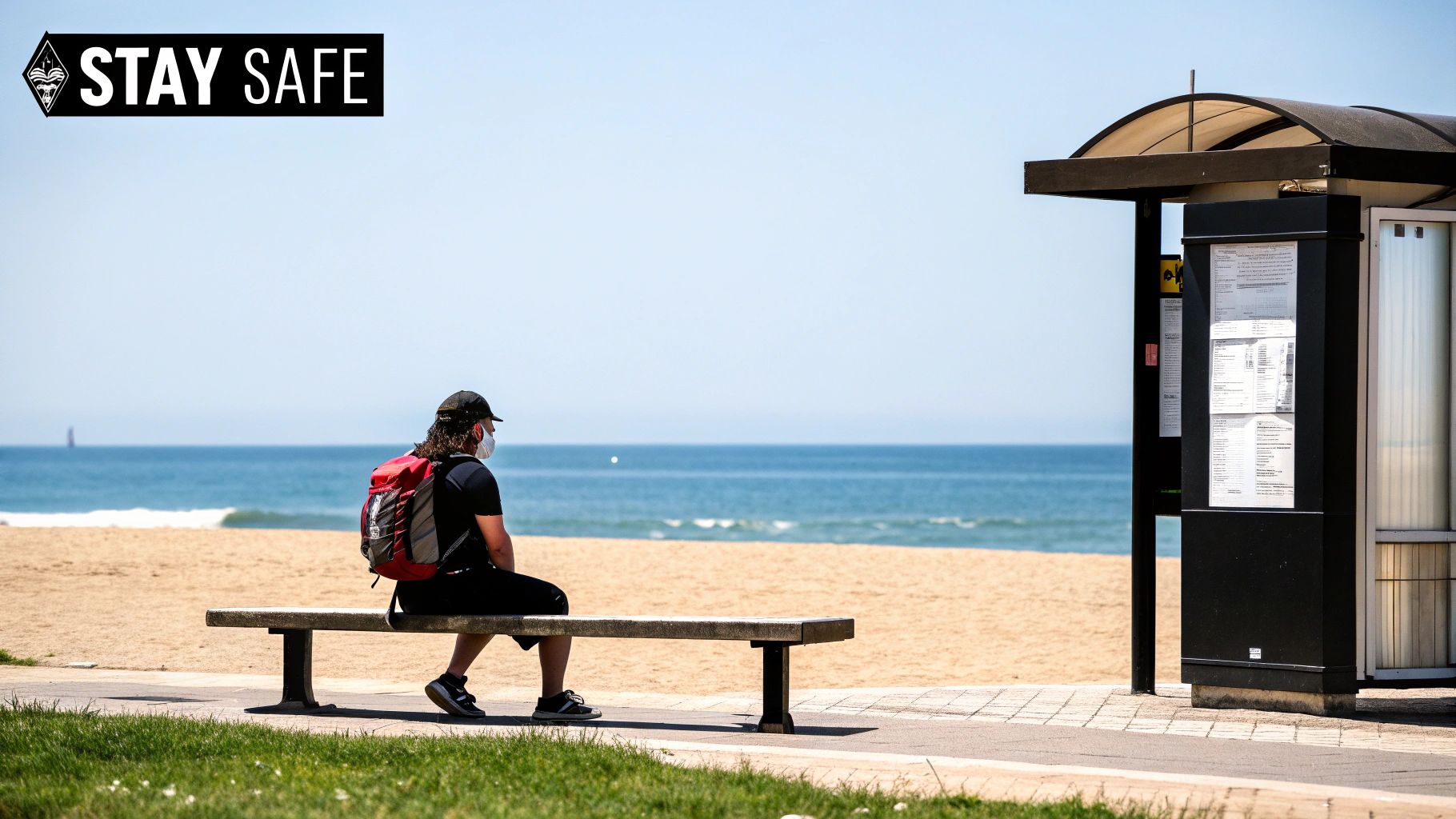
Let's talk about safety in Rio. The city gets a bad rap sometimes, but millions of people visit without a single issue. It’s not about being scared; it's about being smart and aware—just like you would in any big city around the world. A little bit of street sense goes a long way and lets you focus on having an incredible time.
Most problems tourists run into are crimes of opportunity, like a wallet getting lifted in a crowd or a phone being snatched. The best way to avoid this is to not look like an easy target. It starts before you even walk out of your hotel.
Leave the expensive jewellery and designer bags at home. A flashy watch or a gold chain can draw the wrong kind of attention. If you like wearing accessories, go for something simple or inexpensive that you wouldn't mind losing.
Blending In and Staying Aware
Your best defence is simply paying attention to what's going on around you. This is especially true in the really busy spots, like the crowds at the Selarón Steps or on the packed sands of Copacabana and Ipanema.
Here are a few habits I've found make a huge difference:
- Keep Your Phone on the Down-Low: If you need to check a map or snap a quick photo, do it and put your phone away. Don't walk down the street glued to your screen. It's much safer to step into a shop or grab a seat at a café if you need to use it for a few minutes.
- Beach Smarts: It's easy to let your guard down when you're relaxing on the beach. Never, ever leave your bag unattended to go for a swim. A classic snatch-and-grab involves one person distracting you while another grabs your stuff.
- Carry Only What You Need: Just take enough cash for the day, one card, and maybe a copy of your ID. Leave your passport, extra credit cards, and other valuables locked up in your hotel safe.
These little things quickly become second nature. For instance, instead of carrying a big backpack that screams "I'm a tourist," try a small, discreet bag you can wear on your front when you're in a crowded market or on the metro.
The best tool you have is your own awareness. By staying observant and using common sense, you can move through the city with confidence and really soak in Rio's amazing energy without the stress.
Getting Around Safely After Dark
When the sun goes down, Rio's vibe changes, and so should the way you get around. While it’s generally fine to walk around lively neighbourhoods like Ipanema or Leblon, it's always smarter to grab a ride for longer distances at night.
Apps like Uber and 99 are your best bet. They're reliable, the journey is tracked, and you know the price upfront. When your car pulls up, always double-check that the licence plate, car model, and driver's face match what's in the app before you hop in.
If you have to take a taxi, try to get one from an official taxi stand (ponto de táxi) or ask your hotel or restaurant to call a reputable one for you. Hailing one off the street at night is best avoided.
Navigating Local Customs and Packing Right
A little bit of local know-how makes everything smoother. In restaurants, a 10% service charge is almost always added to the bill. While it's not legally mandatory, it's customary to pay it unless the service was truly awful. For great service, an extra bit of cash is always appreciated.
Trying out a few words in Portuguese will also win you smiles everywhere you go.
- Olá / Oi (Hello / Hi)
- Bom dia / Boa tarde / Boa noite (Good morning / afternoon / night)
- Por favor (Please)
- Obrigado / Obrigada (Thank you – if you're male / female)
- A conta, por favor (The bill, please)
Finally, packing right is part of staying safe and comfortable. Rio is hot and humid most of the year, so think light, breathable fabrics.
Make sure these are on your packing list:
- Comfortable Walking Shoes: You'll be on your feet a lot, from the cobblestone streets of Santa Teresa to the long beach promenades.
- High-SPF Sunscreen: The sun in Brazil is no joke, even on overcast days. Reapply it often.
- Versatile Clothing: Think light layers. You'll want casual beach stuff, comfy outfits for sightseeing, and maybe something a little nicer for a samba club in Lapa.
- A Reusable Water Bottle: It's essential to stay hydrated in the tropical heat.
Combine these practical tips with the right gear and a friendly attitude, and you’re all set for a fantastic and worry-free tour of Rio de Janeiro.
Your Rio Questions, Answered
Let's wrap up with a few quick answers to the questions I hear most often from travellers planning their first trip to Rio. Think of this as your final checklist to make sure you land with confidence and have an incredible time.
What Currency Should I Use in Rio?
The local currency is the Brazilian Real (R$), and you'll definitely need it. While you might be able to pay for a tour or a hotel room in US dollars, you'll need Reais for everything else – from taxis and Ubers to that caipirinha on the beach.
Credit and debit cards are accepted almost everywhere in the main city zones, but it's always smart to have a bit of cash on hand. Sometimes a card machine is down, or you'll want to buy something from a small street vendor. Cash is king for the little things.
How Many Days Do I Really Need in Rio?
I always tell first-timers to aim for at least four full days. That gives you enough time to hit the big-ticket items like Christ the Redeemer and Sugarloaf Mountain, have a proper beach day, and wander through the colourful streets of Lapa and Santa Teresa without feeling like you're in a race.
Got more time? Perfect. Stretching your trip to five to seven days is ideal. You can slow down, maybe take a cooking class, hike in the Tijuca Forest, or even plan a day trip outside the city. It lets you sink into the city's rhythm instead of just checking things off a list.
Is the Tap Water Safe to Drink?
Officially, the water is treated, but my advice is to stick to bottled water. Your stomach just isn't used to the local water supply, and the last thing you want is to spend a day of your holiday feeling unwell.
Bottled water is cheap and sold on virtually every corner, from supermarkets to beach kiosks. Your hotel will likely have filtered water available, too, which is perfect for refilling your own bottle.
What's the Tipping Situation?
Tipping in Brazil is pretty relaxed. In restaurants and bars, a 10% service charge (serviço) is usually added to your bill automatically. It's technically optional, but everyone pays it unless the service was truly terrible.
You don't need to tip taxi drivers or hotel staff, but a little something is always appreciated for great service. If a guide gives you an amazing tour or a bellhop goes out of their way, a small tip of R$10-20 is a very kind gesture.
Will I Get by With Just English?
In the tourist hotspots like Copacabana and Ipanema, and in major hotels and fancier restaurants, you'll find plenty of people who speak English. But the moment you step off that well-trodden path, you'll find Portuguese is the only language on the menu.
Don't let that intimidate you! Learning just a few key phrases will completely change your interactions with locals. They really appreciate the effort.
- Olá (Hello)
- Por favor (Please)
- Obrigado/Obrigada (Thank you – said by a male/female)
- A conta, por favor (The bill, please)
Keep a translation app on your phone for backup, and you'll be all set. A little bit of Portuguese goes a long, long way in making your tour of Rio de Janeiro a richer, more authentic experience.
Planning your arrival in Brazil? For a seamless and comfortable journey from São Paulo's main airport, trust Gru Airport Transfers for reliable, professional transportation. Book your ride today and start your trip stress-free by visiting gruairporttransfer.com.

